



Alright, November people. Let's talk about what it means to be last — and not last in the losing sense. Last in the sense of: still going when everyone else has wrapped up. Still blooming when the rest of the garden has decided the season is over. Still in the room when other flowers have made their exits, taken their applause, and departed.
The Chrysanthemum blooms in October and November — sometimes into December — specifically in the window when every other flowering plant has concluded that conditions are no longer appropriate for flowers. The Chrysanthemum did not consult the other flowers about this decision. The Chrysanthemum does not consult anyone about decisions. It is the national flower of Japan. It sits on the Imperial Seal. It has been cultivated in China for over 2,500 years. It is one of the Four Gentlemen of Chinese art. And it blooms in November, when the light is low and the temperature has dropped and most of the natural world has decided the performance is over.
This is your flower.
The Chrysanthemum Sign · November — Still Here. Still Blooming. Did Not Ask for Your Assessment of Whether This Was Realistic. November people have a quality that is easy to recognise and difficult to manufacture: they are still going. The Chrysanthemum has been executing this exact move for 2,500 documented years. Neither the flower nor the people it represents have plans to change the approach.

The Darkness Is Not the Obstacle. The Darkness Is the Trigger.
The Chrysanthemum is a short-day plant — it blooms in response to longer nights, triggered by the reduction in daylight that comes in autumn. It does not bloom despite the darkness. It blooms because of it. The longer the night, the stronger the signal to flower.
November people who have noticed that their best work tends to happen in difficult conditions, who get sharper rather than slower when the environment gets harder, who find that they clarify under pressure in a way that surprises people who've never seen them in pressure: this is your plant. The darkness is not the obstacle. The darkness is the trigger.
There is also the matter of the name: chrysanthemum comes from the Greek chrysos meaning gold and anthemon meaning flower. Golden flower. The flower that blooms gold in November when everything around it is going grey. November people have been doing the exact same thing in the exact same conditions, and some of them have only just understood why it feels so natural.
It blooms because of the darkness, not despite it. It is the national flower of Japan. It sits on the imperial seal. It has been cultivated for 2,500 years. It is the golden flower that blooms when the rest of the garden has finished. November people were assigned this flower and the assignment is correct. — Chive Studio
Japan Put It on the Imperial Seal. China Made It One of the Four Gentlemen. Korea Called It Noble.
Most flowers earn one civilization's devotion. The Chrysanthemum collected the devotion of every major East Asian civilization simultaneously and then, as a bonus, became one of the most cultivated flowers in the Western world as well.
In China the chrysanthemum has been cultivated since at least 500 BCE, making it one of the oldest continuously cultivated ornamental plants on Earth. Confucius wrote about it. The poet Tao Yuanming planted chrysanthemums at his farmhouse and wrote about them with such specific affection that the flower became permanently associated with his philosophy of simplicity and integrity. In traditional Chinese culture the chrysanthemum became one of the Four Gentlemen — alongside orchid, bamboo, and plum blossom — representing the qualities of a noble person: resilience, integrity, humility, and the ability to thrive when conditions are hard.
In Japan the chrysanthemum arrived from China in the eighth century and within a few hundred years had become the symbol of the Imperial family. Emperor Go-Toba adopted the sixteen-petal chrysanthemum as his personal seal in the twelfth century, and it has appeared on the Imperial Seal of Japan ever since. Japanese passports carry the chrysanthemum. The Chrysanthemum Throne is the formal name for the imperial seat. The Supreme Order of the Chrysanthemum remains Japan's highest decoration. The flower that blooms in November became, in Japan, the symbol of everything worth protecting and aspiring to.
In Korea the chrysanthemum appears in traditional paintings, embroidery, and pottery as a symbol of nobility and endurance. It is one of the ten longevity symbols in Korean folk art — the Sipjangsaeng — alongside the sun, water, mountains, and cranes. The flower is grouped with geological features and celestial objects as a symbol of lasting endurance. November people have been told they are persistent. The Koreans classified the chrysanthemum with mountains. Both assessments are correct.

Your Official Chrysanthemum Sign Personality Report
Core Trait: Still Going
When other people have called the season, you have not called the season. This is not stubbornness. This is a different read of when the season actually ends. The Chrysanthemum blooms in November because that is when it blooms. November people are still in their bloom when most of the calendar has finished. The timing is the trait. You were not late. Everyone else was early.
Hidden Strength: Darkness as Trigger
You are built for difficult conditions in the specific sense that difficult conditions activate something in you that easy conditions don't. The Chrysanthemum is a short-day plant — longer nights trigger the bloom. You clarify under pressure. You do not scatter when things get hard. You flower. People who have only seen you in good conditions have not seen your full range, and some of them are going to be surprised when November arrives.
Signature Move: Quiet Authority
You do not announce your authority. You exercise it. There is a difference, and the Chrysanthemum has been demonstrating it from the Japanese Imperial Seal for 800 years. November people have a way of being the reference point in a situation without having claimed that role out loud. The room defers to you. You did not ask it to. It did it anyway, which is the only kind of authority worth having.
The Catch: Underestimated Until November
You are not the loudest flower in the spring garden. You are not competing for attention in the peak season. People form their impressions of you in the easy months and then November arrives and those impressions require significant revision. The Chrysanthemum lets the other flowers have the spring. It waits. It is correct to wait.
Greatest Skill: Longevity
You are still here. After everything the year sent. After the conditions that finished other people's bloom cycles. After the full length of a calendar that used everyone else up. The Chrysanthemum, which has been cultivated for 2,500 years on the strength of this exact quality, considers this the correct outcome.
Secret Weapon: Joy That Has No Business Being There
It is November. The days are short. The year has been a year. And you are warm about it — not performed warmth, not forced optimism, actual genuine heat in conditions that don't warrant it. The Chrysanthemum is golden in November. You are warm in November. Both of these facts are correct and both of them are more impressive than they look from the outside.
Compatibility: The Chrysanthemum Has Reviewed the Calendar
Best Pairing — August (Poppy)
The Poppy is vivid, fully present, fast-burning, and does its best work in summer. The Chrysanthemum is steady, long-blooming, and does its best work when the Poppy's season is over. These two are not competing — they are sequential. The Poppy's momentum and the Chrysanthemum's endurance cover the entire year between them. What they produce together is more complete than what either of them does alone.
Challenging Pairing — April (Daisy)
The Daisy is cheerful, immediately present, and genuinely happy to be wherever it happens to be. The Chrysanthemum has a more considered relationship with joy — it arrives in November, earned, specific, the product of a full year's accumulation. This works when the Daisy accepts that depth takes time and the Chrysanthemum accepts that immediate joy is not shallow joy. Both realizations take a full season. The relationship after that is the most durable thing either of them has.
Wild Card — February (Primrose)
The Primrose is the warmth that arrives early, in the worst conditions, before anyone expected warmth to be possible. The Chrysanthemum is the warmth that arrives late, in the last conditions, after everyone assumed warmth was finished for the year. These two are the bookends of a thing that most people only see the middle of. They recognize in each other the decision to be warm when the season argues against it, and that recognition is immediate and hard to explain to anyone who doesn't also bloom in a month that suggests they shouldn't.
Certified Chrysanthemum Facts for Your November Birthday Table
The chrysanthemum has been cultivated in China for over 2,500 years — since at least 500 BCE. That is longer than most countries have existed. The plant has been carefully bred, documented, and cherished for longer than the Roman Empire lasted, longer than Canada has existed as a country by a factor of more than fifteen.
Japan's National Chrysanthemum Day — Kiku no Sekku — falls on September 9th and has been observed since the Heian period, approximately the ninth century CE. It was traditionally celebrated with chrysanthemum sake, believed to promote longevity. The Chrysanthemum Exhibition at the Imperial Palace is still held annually. The flower has been an official occasion in Japan for over a thousand years.
Chrysanthemum tea is one of the most widely consumed herbal teas in East Asia — made from dried chrysanthemum flowers steeped in hot water, used in traditional Chinese medicine for cooling the body, clearing the eyes, and reducing inflammation. The same flower associated with imperial authority and noble endurance is also, in daily practice, the flower you put in your teacup. November people who are simultaneously impressive and completely approachable will recognise this combination.
There are approximately 40 wild species of chrysanthemum and tens of thousands of cultivated varieties — more than almost any other ornamental plant. They range from tiny pompom forms to enormous spider chrysanthemums with petals a foot long. One genus, tens of thousands of expressions of the same underlying thing. November people who contain multitudes: the flower has been demonstrating this approach for 2,500 years and has not run out of variations.
What Blooming in November Actually Means
The Chrysanthemum is photoperiodic — it measures the length of the night, and when the nights reach a certain length in autumn, the flowering process begins. It is not triggered by cold, or by temperature dropping. It is triggered by darkness accumulating. The longer the night gets, the more clearly the signal registers, and when the threshold is reached the Chrysanthemum flowers.
This is the most important thing to understand about November people and the flower they were given: the darkness does not work against them. The darkness activates them. The conditions that have everyone else winding down are the conditions that bring November people into their fullest expression. This is not stubbornness. It is not contrarianism. It is a different and specific relationship to difficulty in which difficulty is the thing that makes the bloom possible.
The colour carries meaning that shifts the whole profile. Yellow means longevity and good luck — the most traditional colour, the golden flower in autumn, the one that gave the plant its name. White means honesty and the specific clarity that comes from having seen things clearly even when clarity was uncomfortable. Red for love and passion that has survived the full year and is still going in November. Purple for a wish for good health — in Japan and China, purple chrysanthemums are given specifically as an expression of care and the hope that someone will keep going. November people receiving purple chrysanthemums: someone is hoping you'll be around for a long time. The feeling is mutual.
Chive Studio · Toronto
The Chrysanthemum at Chive
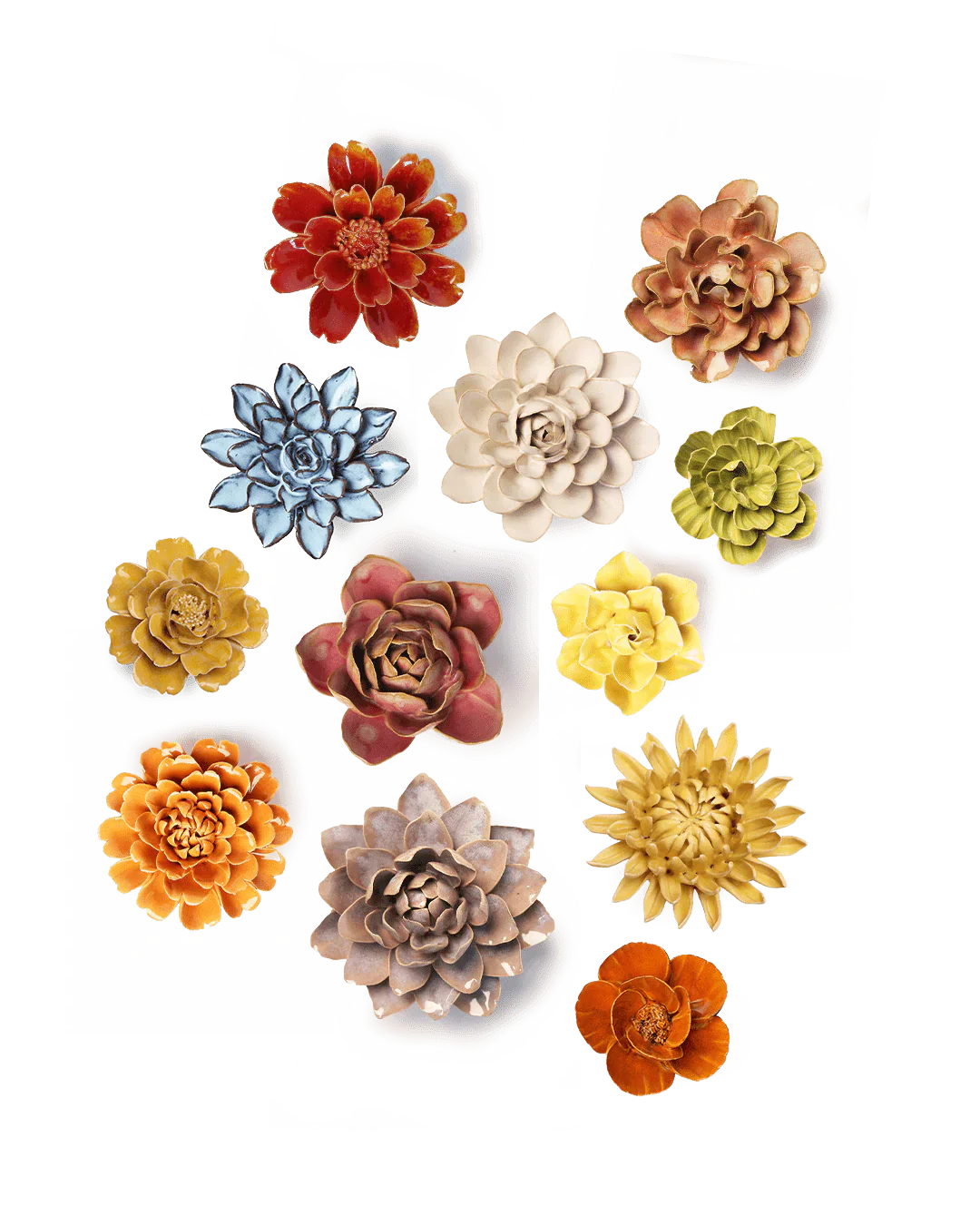
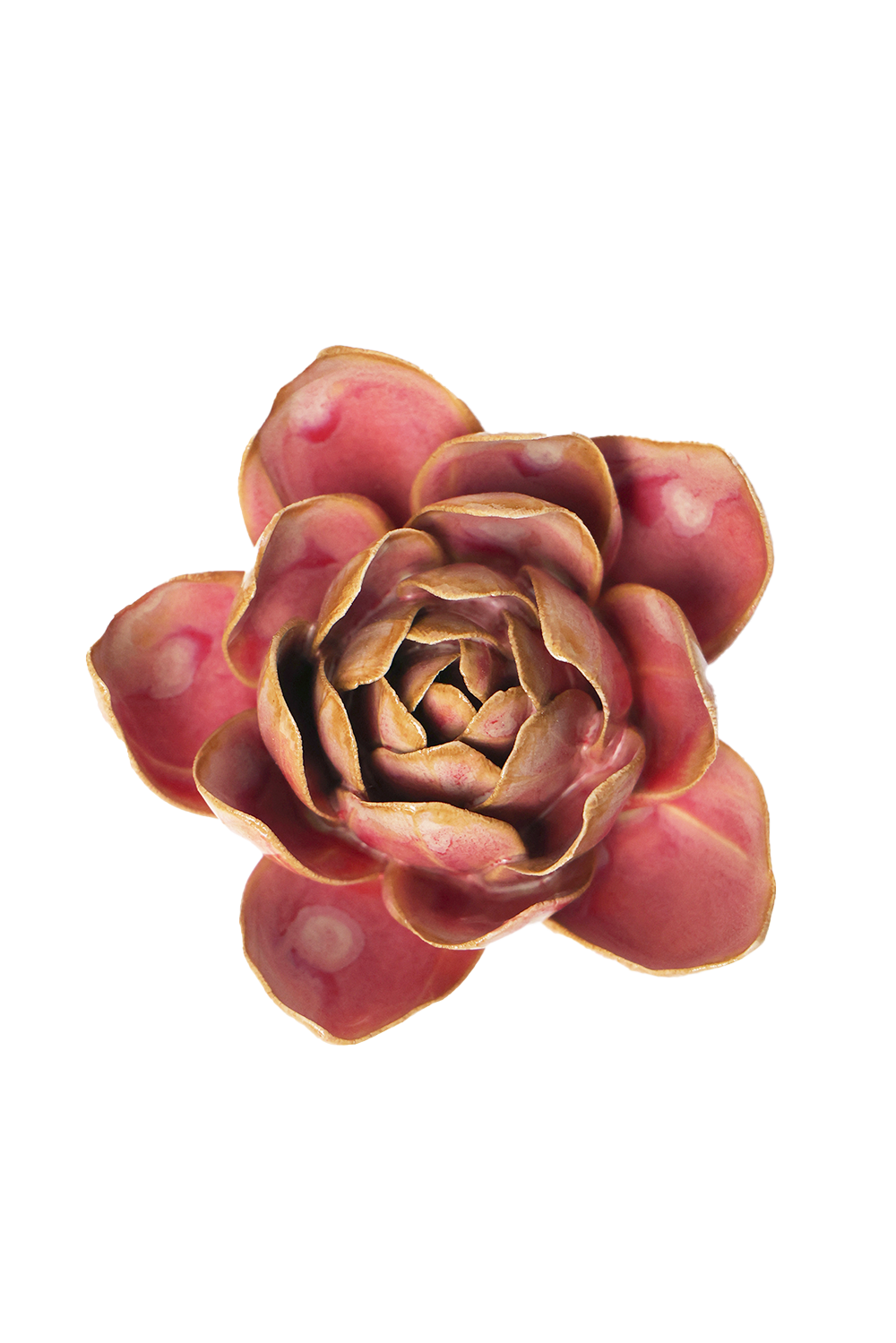
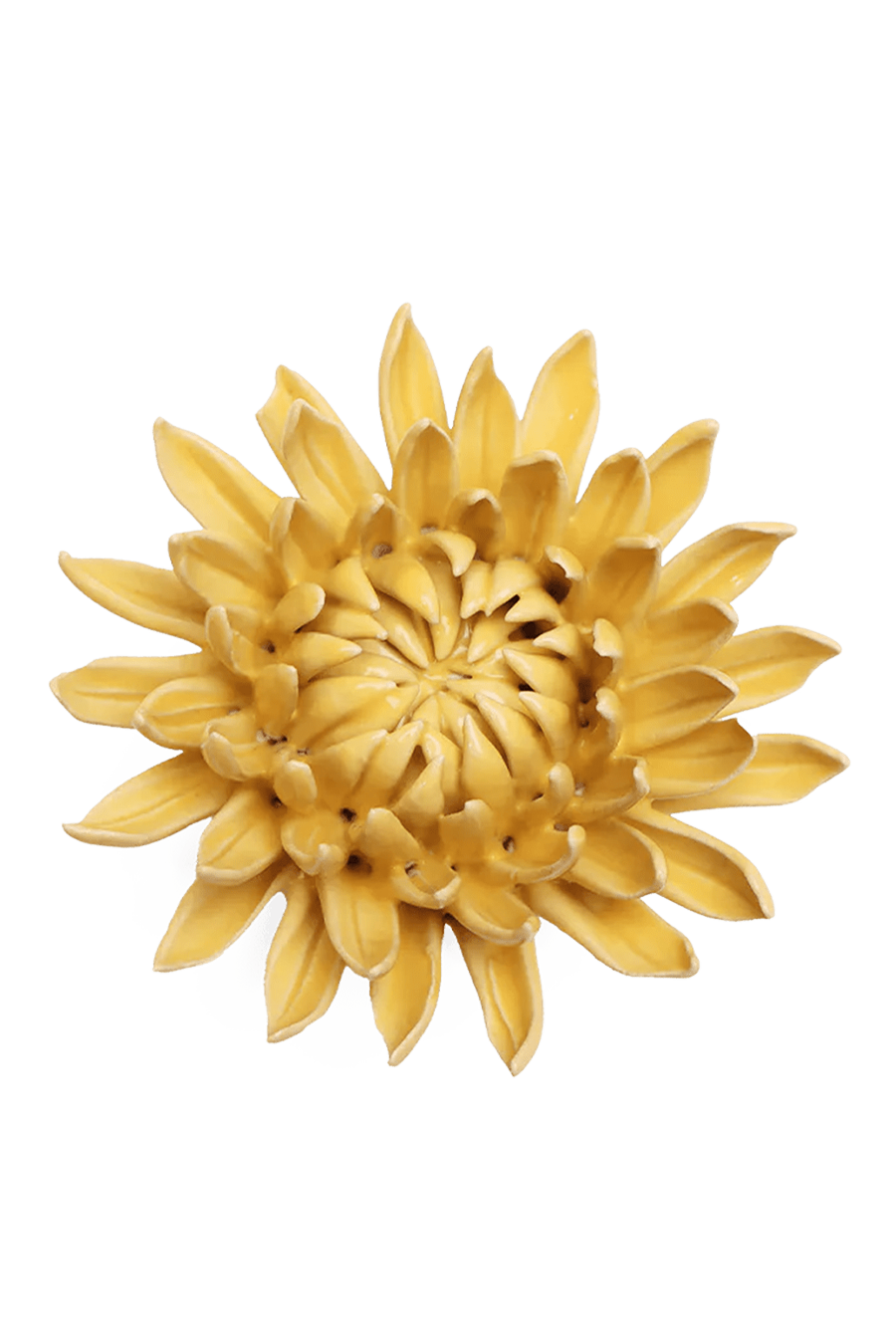
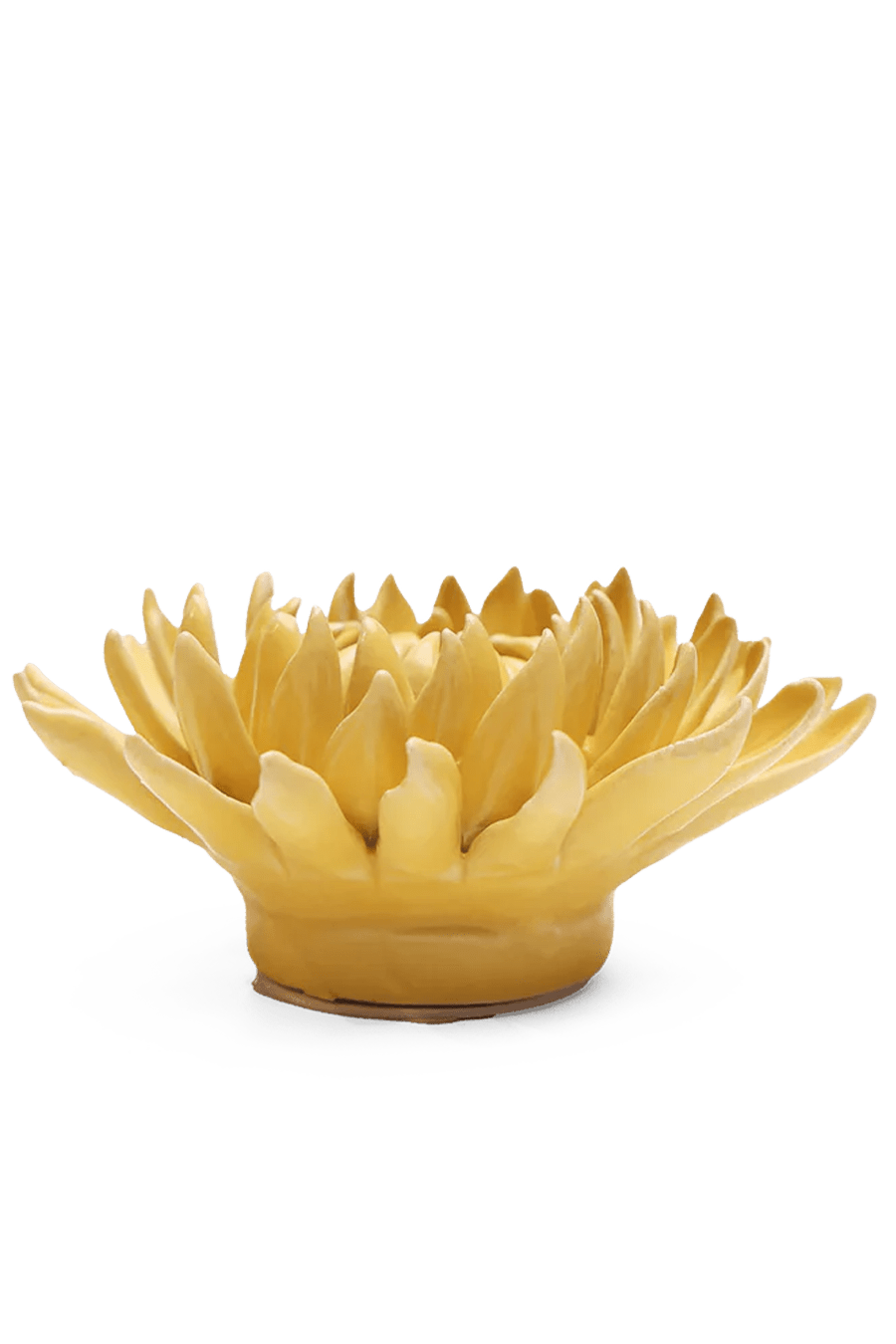
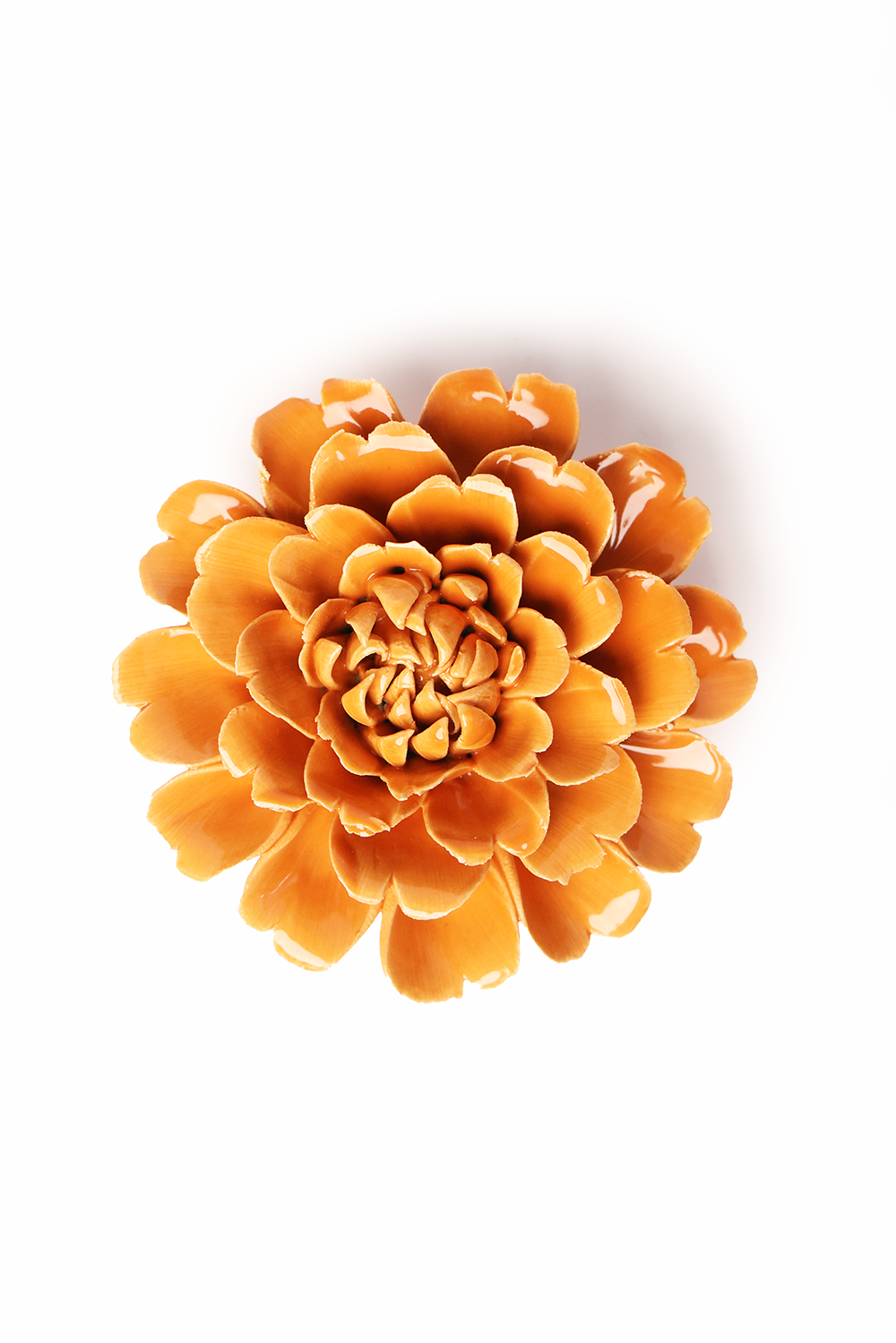
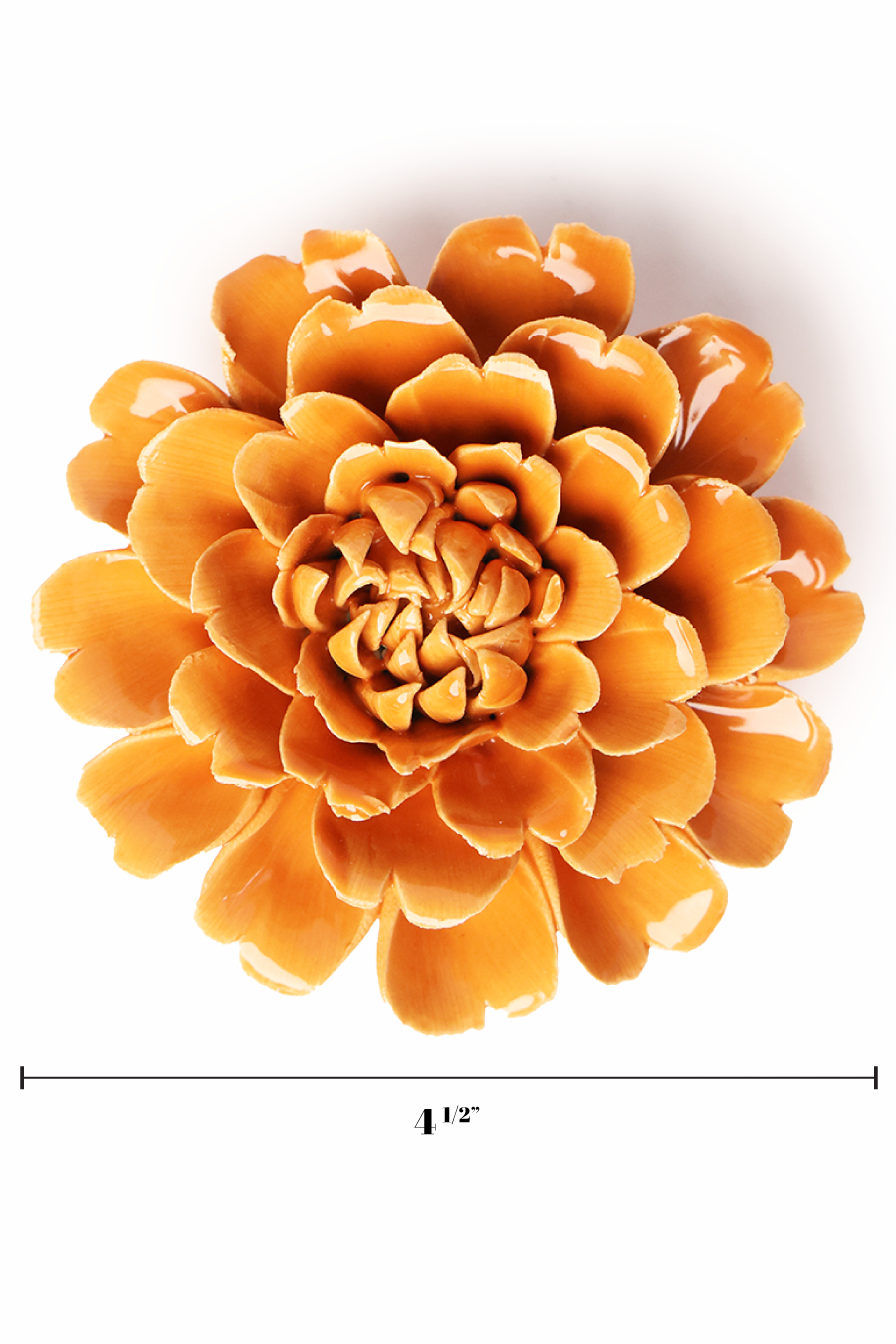
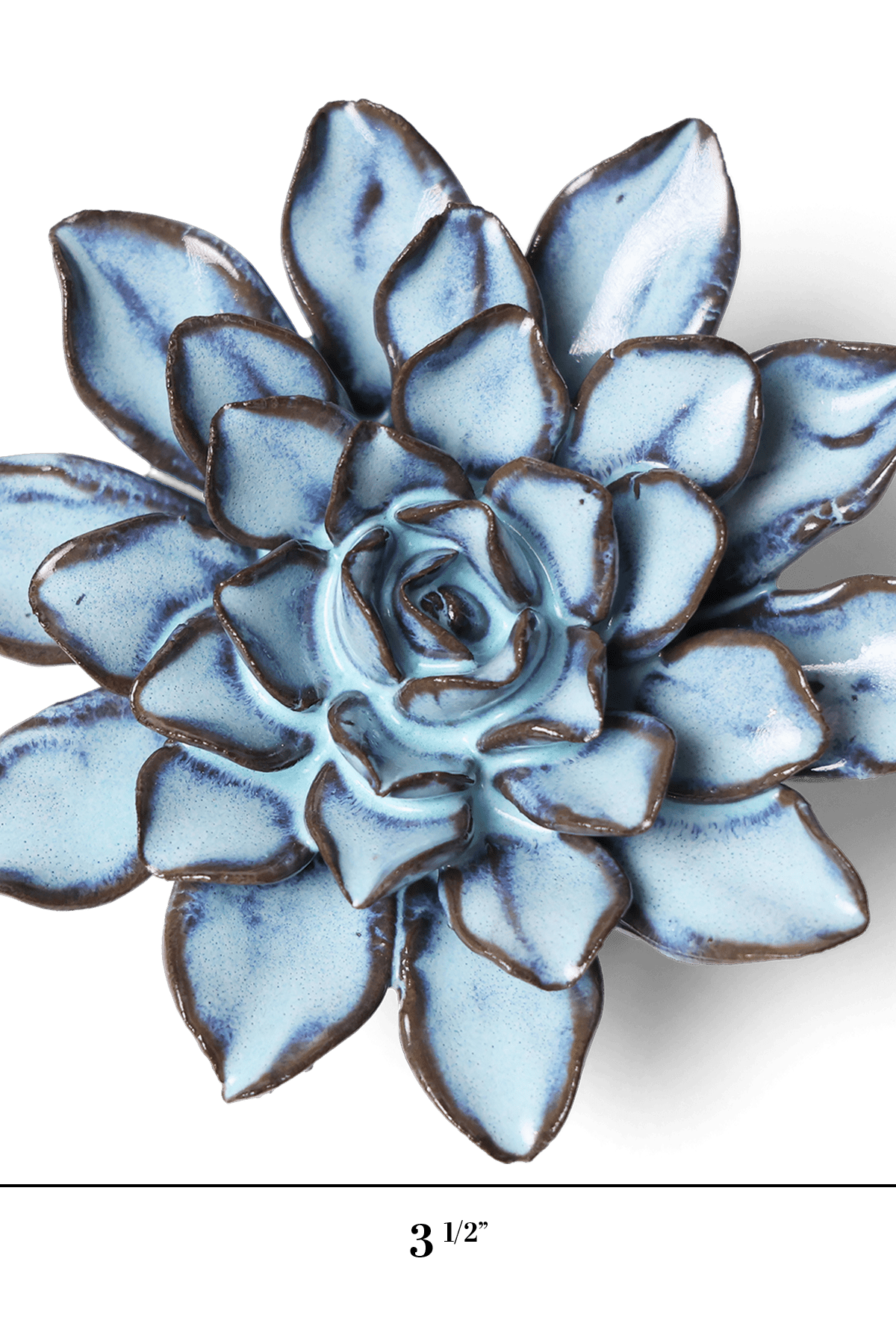
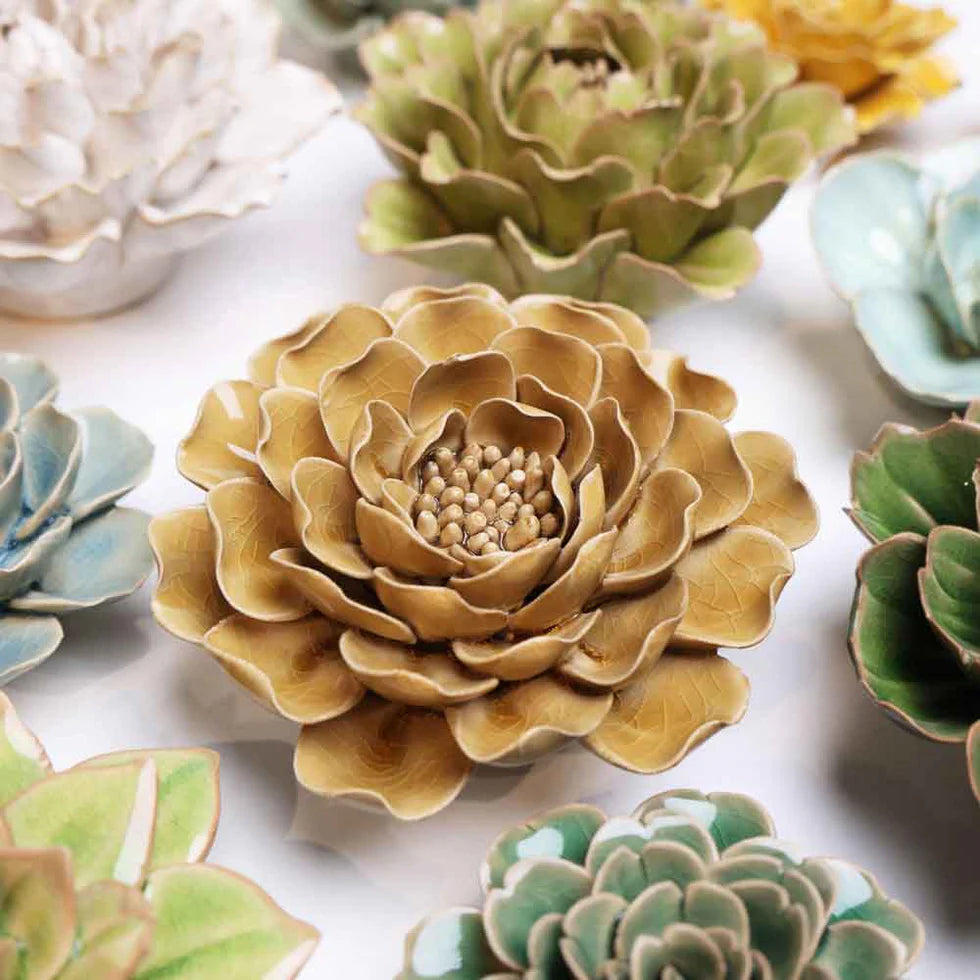
The Chrysanthemum in Buttercup Yellow has found its way to institutions and collections across Canada and North America — botanical gardens, art museums, and gift shops that evaluate objects seriously before offering them. The Royal Ontario Museum in Toronto. The Art Gallery of Ontario. The San Antonio Botanical Garden. The Columbus Zoo and Aquarium. The Chrysler Museum of Art in Norfolk, Virginia, which applies the same rigour to decorative objects as it does to painting and sculpture, and found the work worth stocking. The RHS Chelsea Flower Show awarded Chive a four-star tradestand award in 2026 after fourteen consecutive years of exhibiting — a record that answers most questions about whether the work meets a high standard and leaves the rest to whoever is standing in front of it. The birth flower collection ships gift-ready across Canada. The chrysanthemum travels well. It arrives the way it left: correct, intact, and in the same glaze it will be in twenty years.
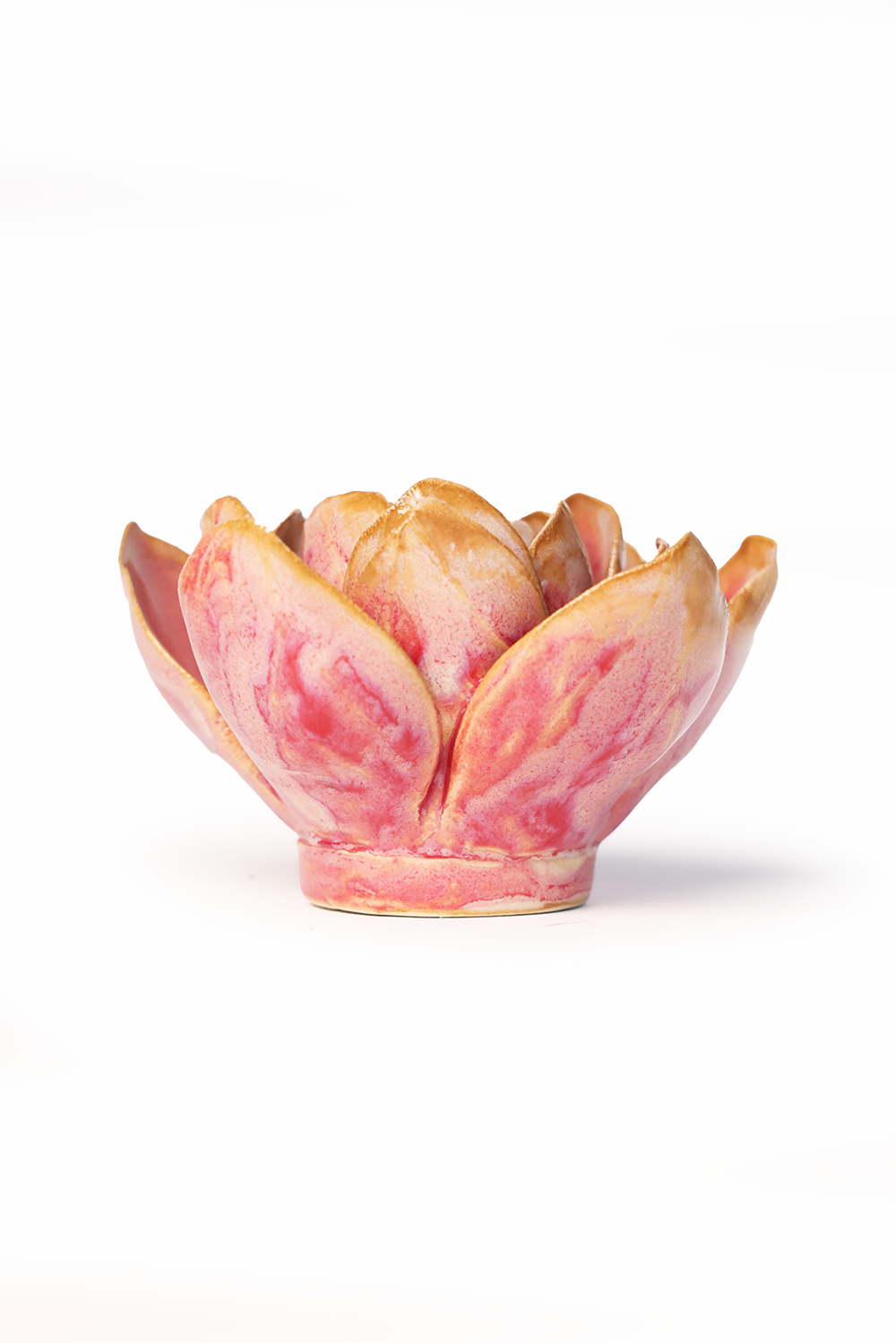
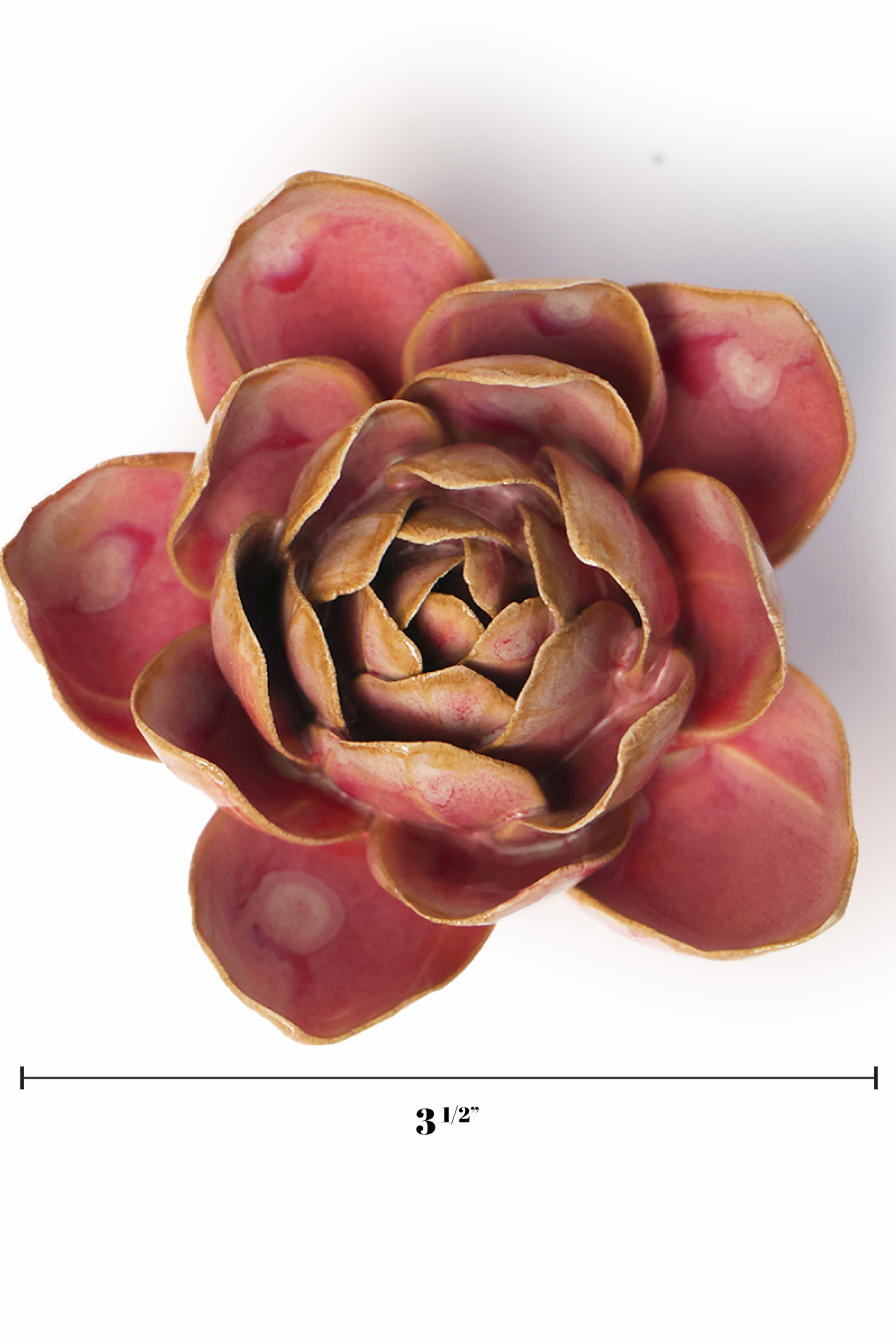
Keyhole in the back for hanging. Works on a desk or shelf. No short-day requirements, no autumn light schedule, no November timing needed. It arrives ready to bloom. As November birth flower gifts go, it is the one that keeps looking right long after everyone else's seasonal decorating has been packed away, which is the most November thing about it.
If one Chrysanthemum isn't enough — and for November people who have come this far in the year and feel the occasion warrants the full statement — the Japan collection is the natural next place to look. The chrysanthemum has been the imperial flower of Japan for over a thousand years. Chive's Japan pieces carry that lineage without making a production of it. The English Garden collection carries more pieces worth a look. Or go straight to a curated set and let Chive do the assembling. The Chrysanthemum has been patient for 2,500 years. It can wait for you to decide.
The November birth flower at Chive Studio
- Buttercup Yellow glaze — developed in the Chive Studio in Toronto
- Ships gift-ready across Canada — arrives in a box, no additional wrapping needed
- Keyhole in the back for hanging, or works on a desk or shelf — no autumn light schedule required
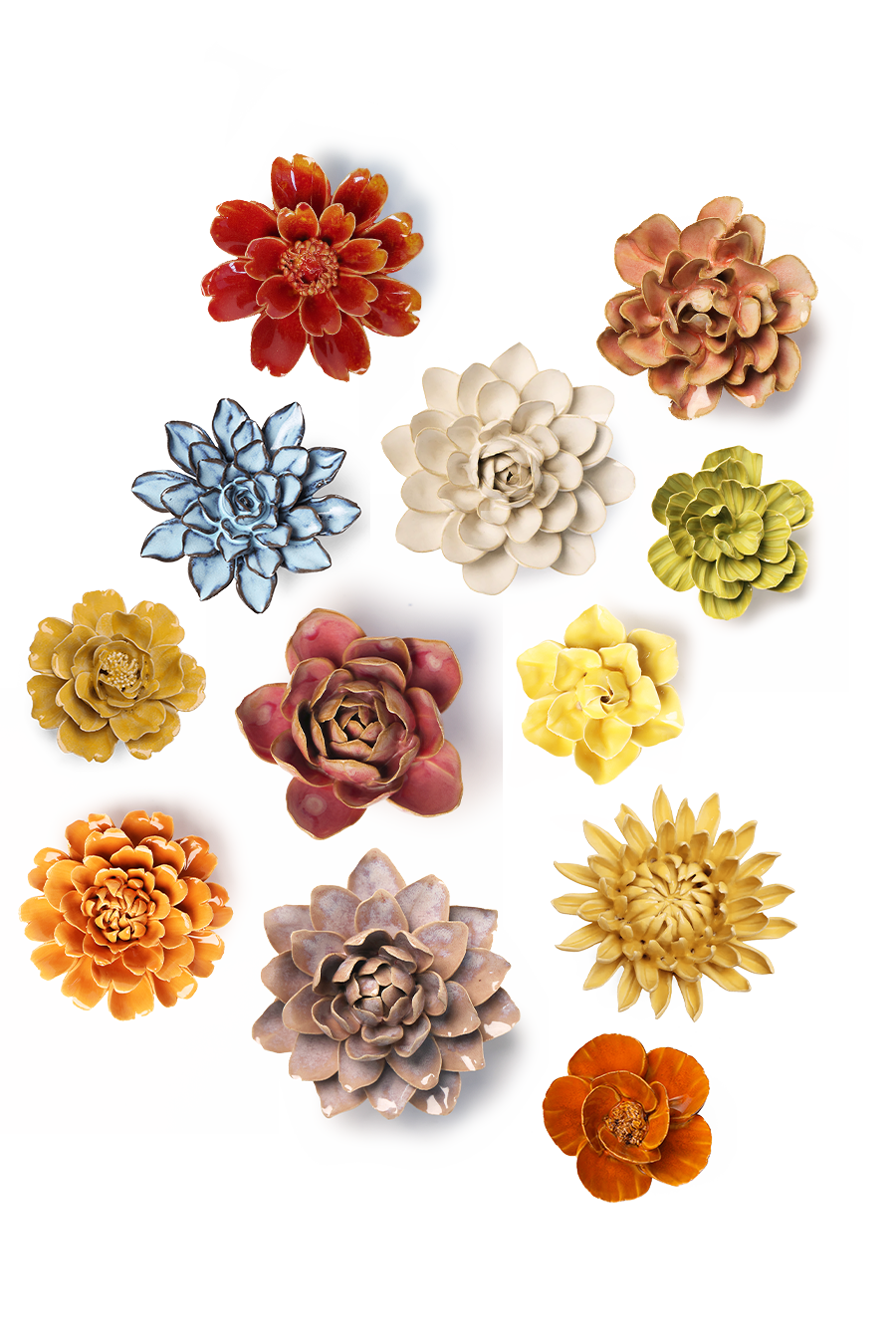
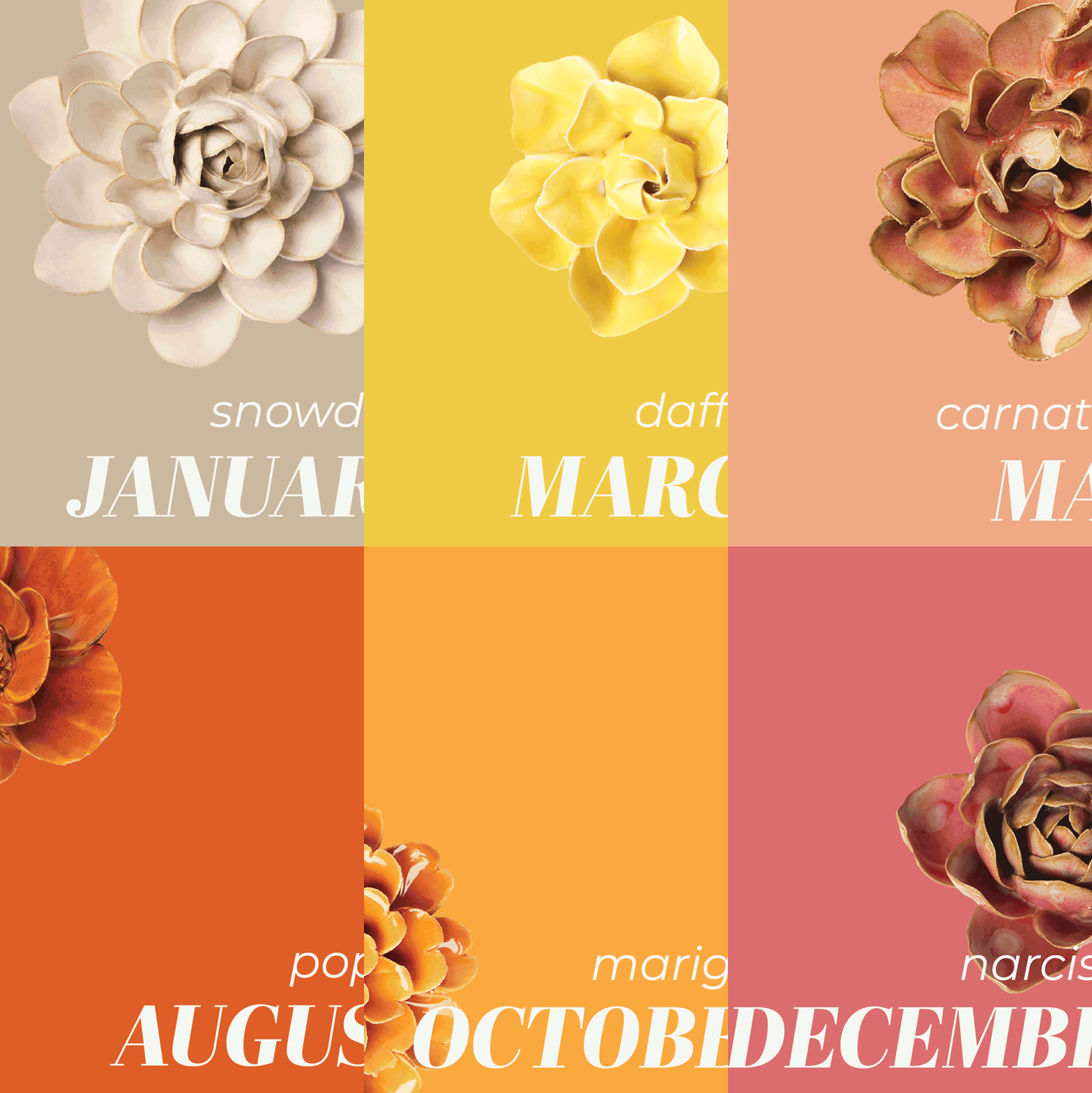
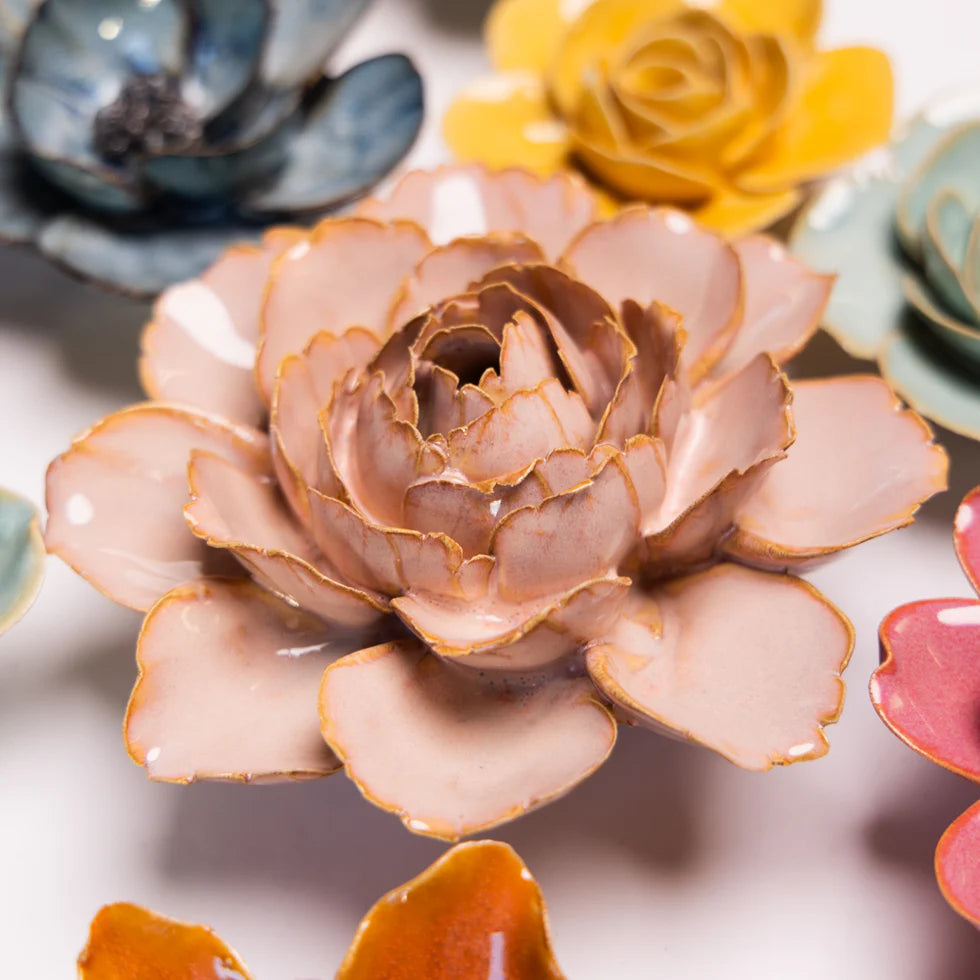
- Part of the birth flower ceramic collection — all 12 months, all in the correct glaze colour for each
- The complete list: January snowdrop, February primrose, March daffodil, April daisy, May hawthorn, June rose, July water lily, August poppy, September aster, October marigold, November chrysanthemum, December narcissus
The Season Is Not Over. It Was Never Over. It Was Yours.
You are still going. The season that finished everyone else is the season you bloom in. The darkness that signals other flowers to wrap up signals you to flower. You have quiet authority you did not claim out loud and that the room defers to anyway. You carry joy in November because you decided to, and that decision has been tested by every month that preceded it, and it held.
The Chrysanthemum has been cultivated for 2,500 years on the strength of one quality: it blooms when nothing else does, and it blooms beautifully, and it does not make a speech about it. The emperor put it on the seal. The poets wrote about it. The longevity traditions gathered around it. The flower just kept showing up in November, golden, still going, having outlasted the year without making anyone feel bad about finishing earlier.
That is a November person. Happy birthday.
Chive Studio has been designing and handmaking ceramic flowers since 1999 — always original, often copied. The chrysanthemum is part of the Birth Flower Collection, which is carried at the Royal Ontario Museum in Toronto and the Art Gallery of Ontario. The San Antonio Botanical Garden stocks Chive ceramics. So does the Columbus Zoo and Aquarium, and the Chrysler Museum of Art in Norfolk, Virginia, which applies the same rigour to decorative objects as it does to painting and sculpture. The Birth Flower Collection ships gift-ready across Canada. Chive is the recipient of the RHS Chelsea Flower Show four-star tradestand award, awarded during fourteen consecutive years of exhibiting. Designed in Toronto, made by hand since 1999.