







Chive Studio · Plant Care
Indoor Fern Care: The Complete Guide

There is no in-between with a fern. It's either the easiest plant in the house, or it's setting some kind of personal record for how fast a living thing can turn into potpourri. When mine starts misbehaving — crisping at the edges, sulking, generally failing to hold up its end of the arrangement — I banish it to the bathroom. Constant humidity, steady medium light, and yes, I talk to it in the shower sometimes. It's never once talked back, which honestly might be the only reason the ferns and I still get along.
At Chive Studio, we've been running the bathroom rehabilitation program for more than five years of running our Toronto plant shop, on top of two decades of making the ceramic pots the graduates move back into. Here's how to keep a fern on the right side of its own binary.

How to Care for Indoor Ferns
Nearly everything about fern care reduces to one variable: humidity. These are forest-floor and rainforest plants, built for air that carries real moisture, and indoors that single factor decides which fern you own — the easy one or the crispy one. Get humidity right and the rest of the programme is genuinely minimal: medium indirect light, soil kept consistently moist but never swampy, temperatures above 60°F, and no direct sun frying the fronds. Get humidity wrong and no amount of watering compensates, because a fern loses moisture through all that feathery surface area faster than roots alone can replace it. Solve the air first. The soil is the easy part.
Fern Humidity and Watering Requirements
Ferns want consistently moist soil and genuinely high humidity — not the occasional spritz, an actual sustained level of moisture in the air around them. The NC State Extension fern profile notes that high humidity and consistently moist soil are non-negotiable, and that the plant should never be allowed to dry out — which matches what we see in the shop exactly. A humidifier is the gold standard; grouping plants and pebble trays help at the margins. And then there's the fix that outperforms its reputation: the bathroom. A bathroom with a window is about the closest thing to a fern's natural habitat most homes have to offer — every shower is a humidity event, the light stays steady and diffuse, and a struggling fern moved in there typically turns around within a couple of weeks. Water the soil when the surface just begins to dry, never letting the root ball dry out fully, and never letting it sit soggy either. The balance a fern needs in its soil is the same balance it needs in its air: moist, constant, unremarkable.

Best Indoor Fern Varieties
Boston Fern
One of the two varieties most people already know without realizing it, since it's a common sight growing wild around trees in shaded outdoor areas. Classic, feathery fronds, moderate humidity needs — and of the feathery types, the most reasonable one to actually live with. A Boston fern in a hanging pot or on a stand delivers the full Victorian-parlour effect, and it forgives an average home's humidity better than its delicate relatives, provided the soil stays consistently moist. The default fern, deservedly.
Maidenhair Fern
The other familiar outdoor variety, delicate and lacy-looking, and notoriously one of the harder ferns to keep happy indoors. Beautiful. Unforgiving. The maidenhair's fan-shaped leaflets on wire-thin black stems make it the most elegant plant in this guide, and its tolerance for dry air is measured in hours — miss the humidity and it browns from the edges inward with remarkable commitment. This is the fern for the bathroom-window spot specifically, or for a humidifier owner with steady habits. Everyone else should admire it in the shop, where we do the worrying.
Bird's Nest Fern
A fast, fun grower that does genuinely well indoors, with broad, ripple-edged fronds instead of the classic feathery look. One of the better entry points if you want fern foliage without fern-level anxiety — those solid, strappy fronds hold moisture far better than lacy ones, which buys you real margin on humidity. New fronds unfurl from the fuzzy central rosette — the nest — and the one care quirk worth knowing is to water the soil around that centre, never into it, since a wet crown is the one way this otherwise agreeable fern gets into trouble.
Staghorn Fern
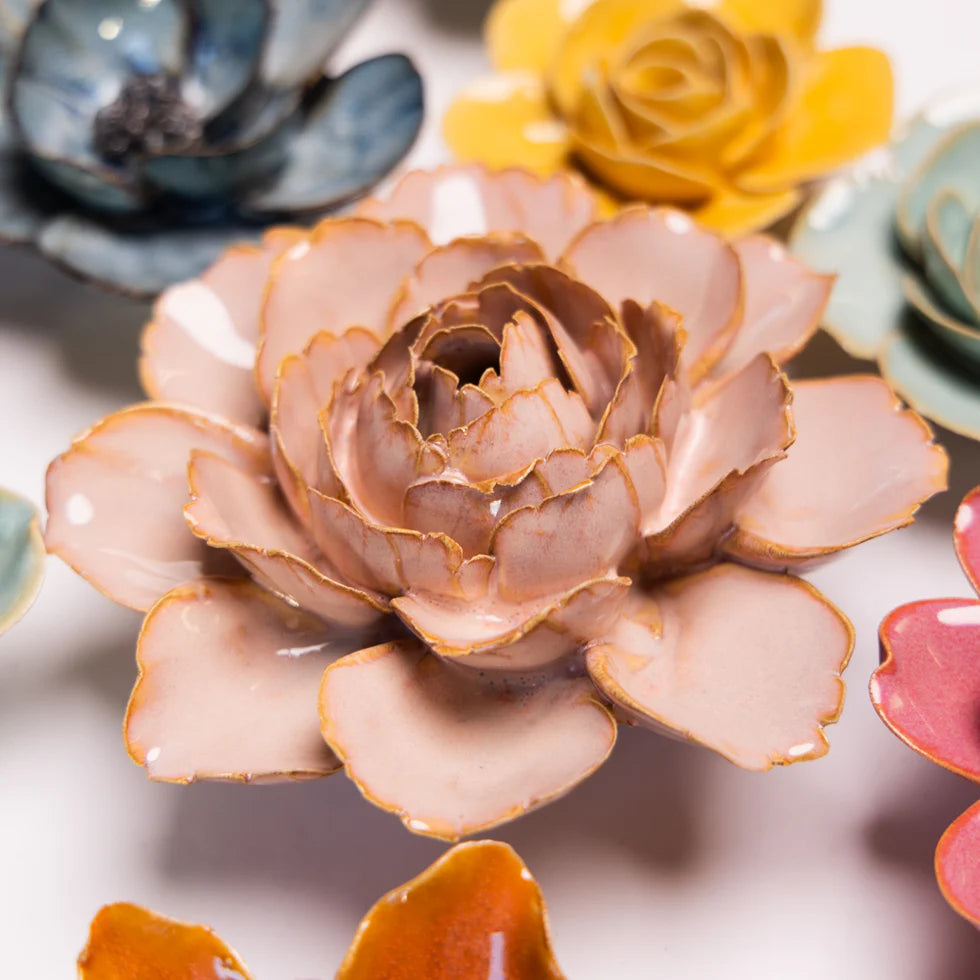
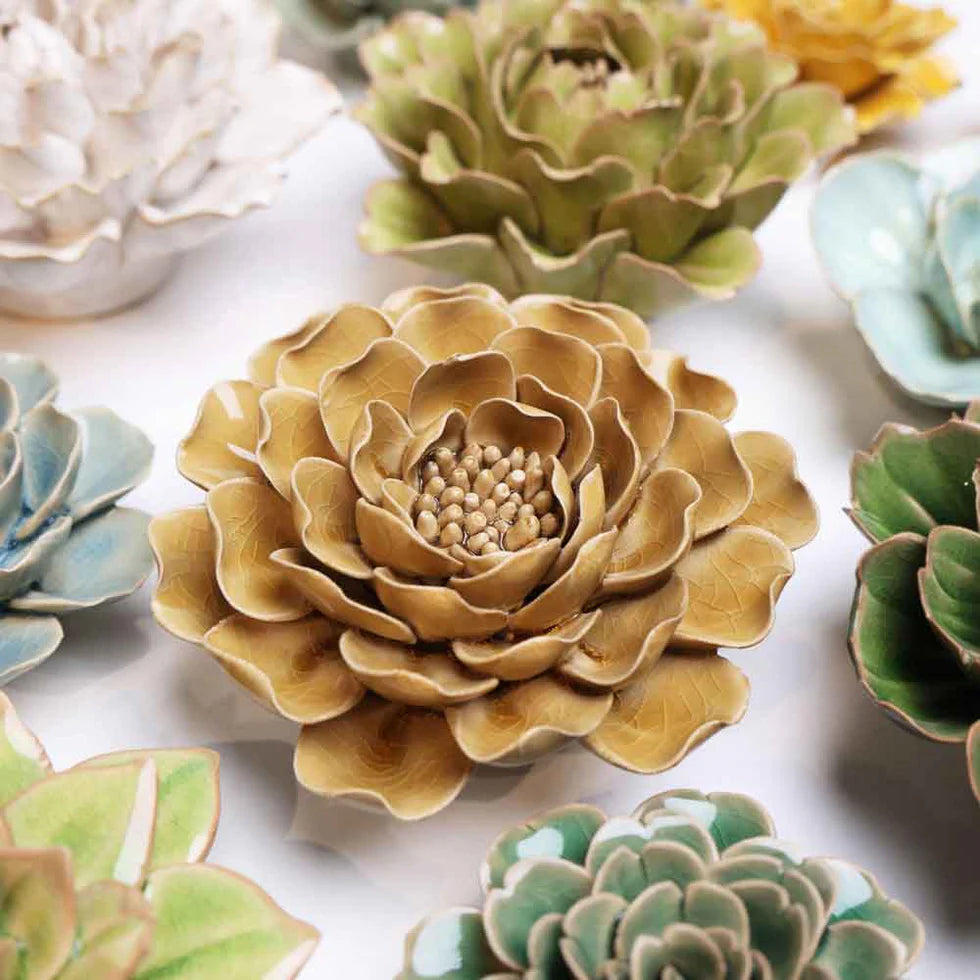
Genuinely one of the coolest-looking plants we carry, almost medieval in its shape, and it's typically mounted rather than potted, which makes it a natural fit for growing straight on the wall. The antler-shaped fronds emerge from a shield of flat basal leaves that grip the mount, and the whole arrangement reads as trophy, sculpture, and houseplant at once. Mounted on a board beside ceramic wall flowers, it turns a wall into the best-planted surface in the house — the living centrepiece of a garden that never needs watering, except for the one piece that does.
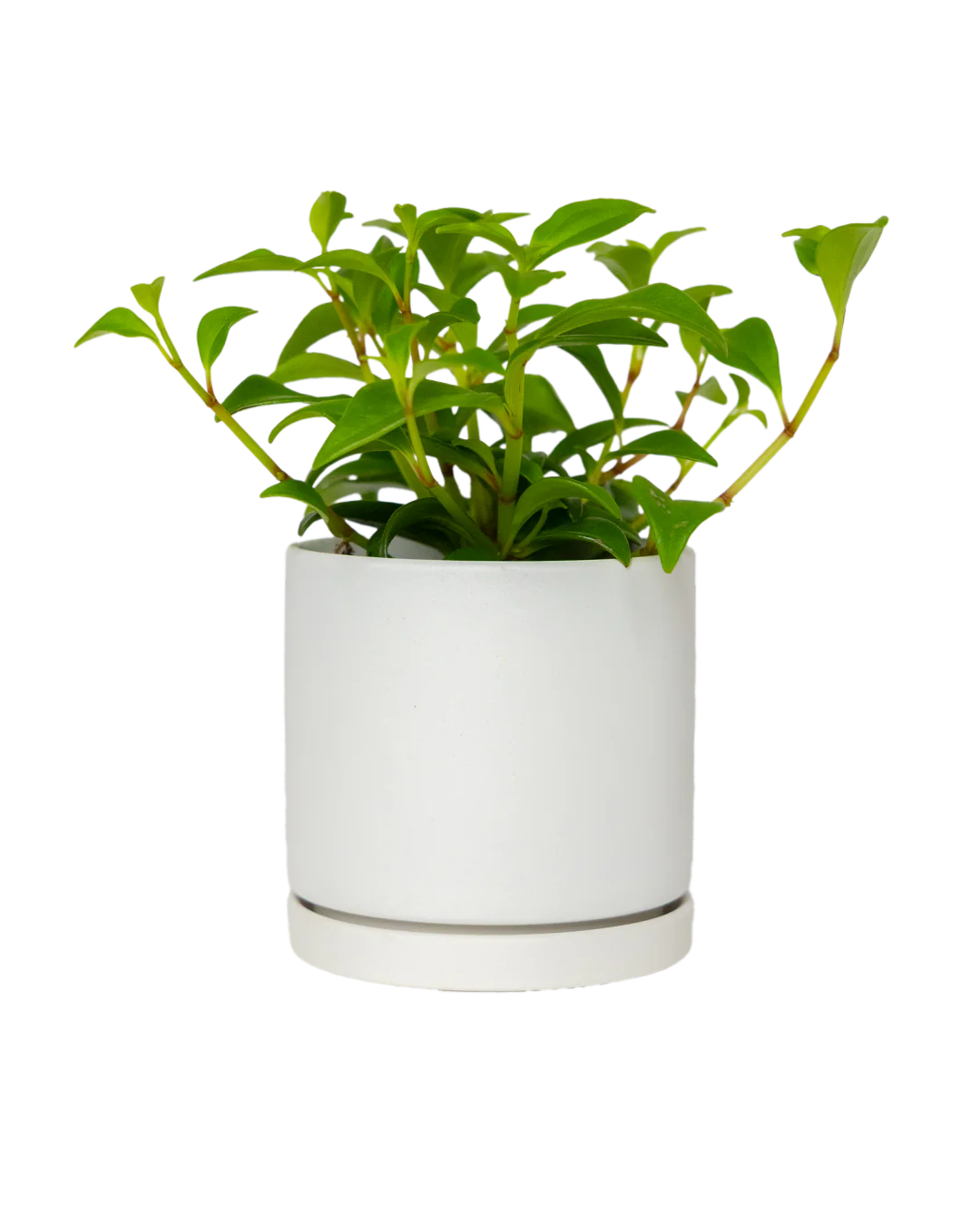
Asparagus Fern
Not a true fern, but close enough in look and reputation to mention here. We've always loved this one, and we'll be honest: it's more complicated to care for than anything else on this list, with fine, needle-like foliage that takes real patience to work with. If you've got carpal tunnel, skip it entirely. The impostor status matters beyond botany, too — unlike every true fern above, the asparagus fern is toxic to pets, which the FAQ below covers properly. The prettiest plant on this list to look at from a distance, in every sense.
Chive's pick for the prettiest one that isn't a total princess: the bird's nest — real fern presence with the widest humidity margin in the family, and the only one here we'd hand to someone who hasn't yet decided whether they're a humidifier person. — Chive Studio
Why Is My Fern Turning Brown and Crispy?
Almost always a humidity problem — dry air is the single most common reason an indoor fern starts shedding or crisping at the tips, and it outranks every other suspect by a wide margin. Low light and inconsistent watering can contribute, but humidity is usually the root cause, especially in winter when heating drops indoor air to desert levels. Run the fix in order: move it somewhere more humid first — the bathroom remains the house's best fern hospital — then check that the soil has stayed consistently moist, then consider light. Trim fully browned fronds at the base; they don't recover, and the plant replaces them once conditions do. It's a simpler fix than people expect. It's nearly always the air.

The Right Pot for an Indoor Fern
A fern wants a pot with solid drainage and soil that holds onto moisture without ever going stagnant — the balance this plant needs in soil is the same balance it needs in the air around it. We pot ours in the Tikka, and there's a strategy behind the size: we try to get a fern up toward an 8-inch pot as quickly as possible, past the fragile early stage, because a fern with an established root mass buffers the moisture swings that kill young ones. Repot in spring when roots fill the pot, keeping the crown at the same depth. Staghorn ferns are the exception to all of this, since they're typically mounted rather than potted at all. Every Chive pot with drainage ships with a genuine drainage hole and matching saucer. We have never made it otherwise.
A fern doesn't split the difference. Get the humidity right and it will reward you with almost no other effort required — get it wrong and you'll find out fast, no slow warning system, no second chances. Give it a bathroom, give it a Tikka pot with room to grow into, and let it prove which kind of fern it's actually going to be.
One Last Thing From the Shop
We generally only sell ferns in the summer, and there's a real reason behind it beyond the humidity — we try to get you into an 8-inch pot as fast as possible, because a fern that size has already cleared the fragile early stage. It's genuinely trying to give you a fighting chance. Nobody should have to go to bed worrying about a plant they bought three days ago.
Chive Studio has been designing and making ceramic plant pots in Toronto since 2004, and running the plant shop on Queen Street West for more than five years on top of that. Our pots are stocked at the McKee Botanical Garden in Florida, the Wadsworth Atheneum, the Museum of Fine Arts Boston, and the Santa Barbara Botanic Garden — institutions with acquisition standards and no patience for objects that don't meet them. We have exhibited at the RHS Chelsea Flower Show since 2013; twice awarded the 5-star booth award — only two are given each year. Always original, often copied.