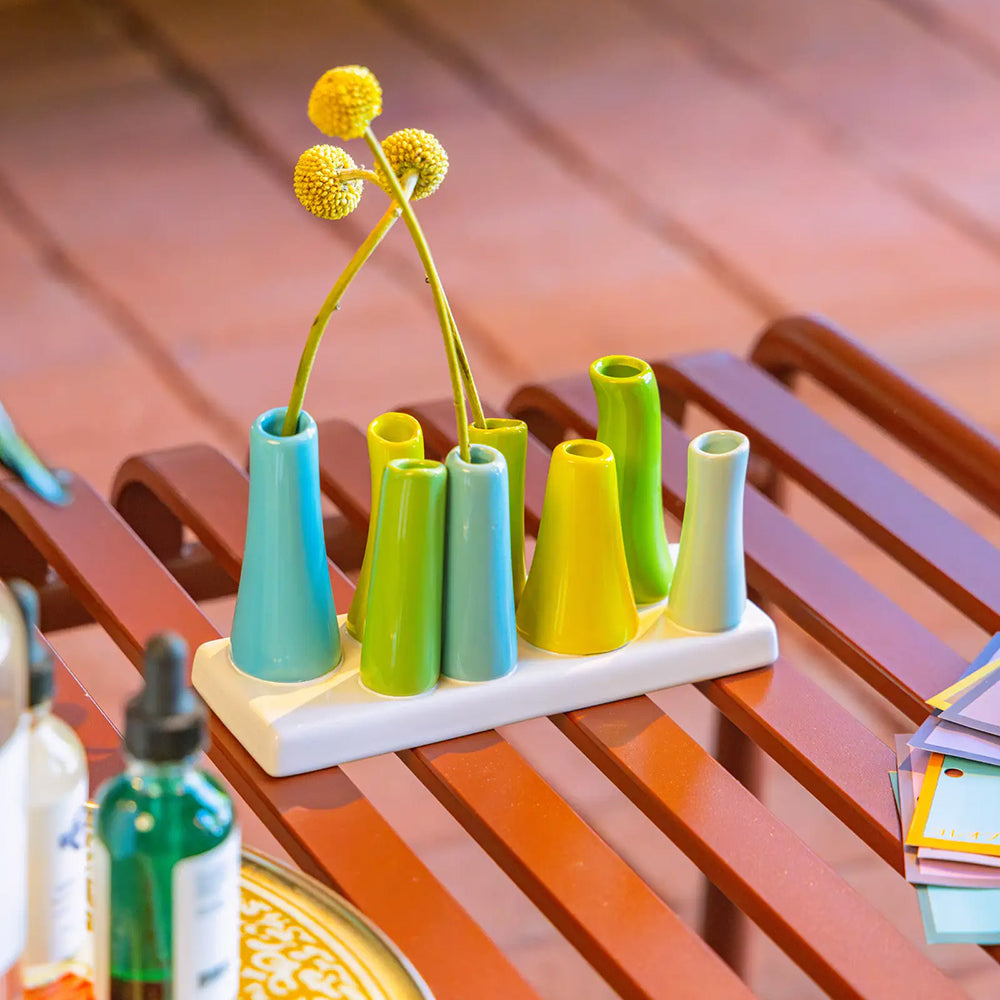
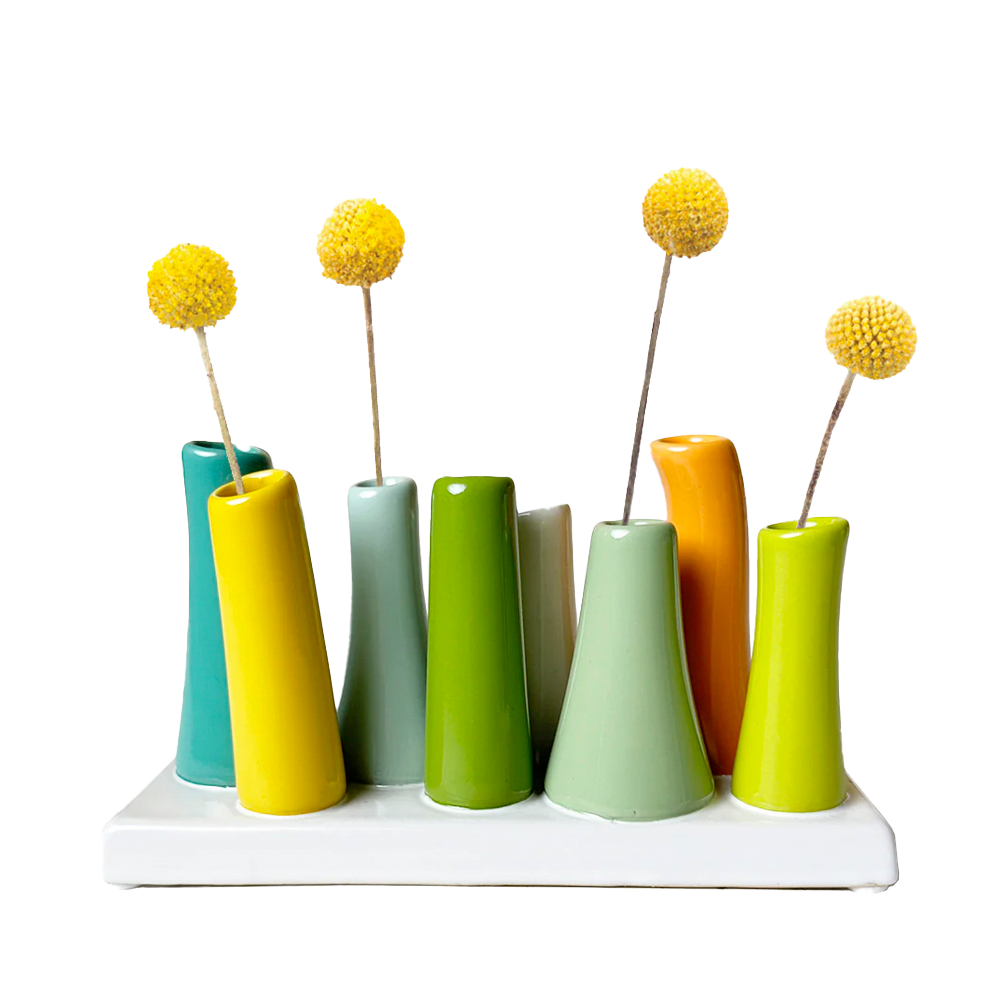
Galaxy Ceramic Bud Vase For Flowers

Regular price $11.95
Colors: Metal
Sizes
Fully Glazed
Dishwasher safe cleaning
30-day return policy

Pickup available at A.N. Deringer c/o Chive Inc

Usually ready in 24 hours


Build Your Effortless Arrangements With These:

Choose a vase as your anchor, then round out the shelf with these for that thrown-together-but-somehow-perfect look.


The Galaxy vase is a blue vase in the same way the night sky is a blue thing — technically accurate, but leaving out the entire point, which is what happens between the blue surface and the light. As a galaxy vase it holds a slender five-and-a-half-inch bud silhouette, and as a speckled ceramic vase it earns the name in the finish, where a scatter of pale flecks reads as either constellations or the smart guess a glaze made when nobody was watching. The impulse to be drawn to shiny things is said to belong to magpies, not people, and certainly not fish, and yet here the studio is, quietly stopping every time this piece catches a passing lamp. The finish is the reason, and the studio is sticking with that story. Artisans shape these pieces by hand at Chive Ceramics Studio, so no two catch the light the same way twice.

Product detail
  • Vase Type: 
  • Material: Ceramic
  • Glaze finish: Glazed
  • Water Resistance: Watertight
  • Year Designed: 2015
Dimension
  • 1.5" diameter, 5.5" tall
Vase Care Instructions

Every ceramic vase in this collection is dishwasher safe on the top rack, making cleanup between arrangements as simple as loading it in with the rest of the dishes. The glazed surface holds up fine to regular washing, so there's no need to hand-wash unless you'd prefer to.

If you're cleaning a piece with painted or sculpted detail, a gentler cycle or a quick hand-wash with warm water and mild soap will help keep the finish looking sharp for longer. Either way, rinse and dry after each use — especially if flower food or cut-stem residue was in the water — so nothing lingers and clouds the glaze.

No special sealants, no periodic maintenance. Wash it, dry it, put flowers back in it.

Flowers that Love this Vase

Quick Guide to Building a Floral Arrangement

  1. Pick your vase first
  2. Start with your anchor flower.
  3. Build in odd numbers.
  4. Add height, then fill.
  5. Greenery does the quiet work.
  6. Cut stems at an angle, underwater if you can.
  7. Step back before you decide it's done.

Canada wide shipping & returns

Shipping 

  • Standard: 5–8 business days, Express 2–3 business days (at checkout)
  • Canada Wide Shipping: from coast to coast — rates at checkout
  • Packaging Ships: in outer box to protect gift box

View full shipping policy →

Returns

We accept returns within 30 days of delivery on unused hard good items in original packaging. If your piece arrives damaged, contact us within 7 days with a photo and we will replace it at no charge.

View full return policy →

Local pickup & delivery

Delivery: 

  • Delivered by hand across Toronto and the GTA. 
  • Next business day; same-day when you call the shop.
  • Local GTA delivery starts at $14
  • Call for a quote outside of the GTA

Pickup: Order online by 3pm and collect it the same day at:

702 Queen St. W.,
Toronto, ON M6J 1E7
437-777-5021

We are open for in-store shopping

Mon to Thurs: 12pm - 7pm
Fri to Sun: 11am - 7pm

Get Directions

Image description

The finish is the reason — the Galaxy

The team has been told, more than once, that being drawn to shiny objects is a magpie trait, not a human one, and definitely not a fish one, since fish have no strong feelings about surface glare either way. And yet the team here consistently pauses beside this specific ceramic piece mid-conversation because it does what its name promises with light — an outcome most product names promise and few deliver. The team does not need a reason for liking a piece this much. The team has landed on the finish itself as the reason and has committed to that explanation publicly. The surface is where the vase earns its name — pale hand-applied flecks scattered across a deep blue body, reading as either a small map of constellations or an educated decision a kiln made without an audience present. The vessel stands 5.5 inches tall by 1.5 inches across, sized for a single stem the way most of the studio's bud vases here are sized. Pick a bloom that responds visibly to available light — a tuberose, a lisianthus head, a single tall cosmos on a long stem — and the piece and the flower collaborate on the same optical trick, which is not something the studio can honestly promise on most weeknights.

A (Mostly) Simple Guide to Cutting Your Flowers

So, you’re making an arrangement? Let’s ensure it lives long enough to impress someone—even if it's just you.

  1. Scrub the Scissors: Wash your shears first. Your flowers do not want a side of Dorito dust.
  2. Cut at 45°: Snip stems at an angle. It gives them a straw instead of making them chug from the bottle.
  3. Trim Underwater (Fancy Mode): Cut them submerged to block air bubbles. It’s extra, but they didn’t ask to suffocate.
  4. Ditch Submerged Leaves: Strip anything below the waterline. Unless you are actively going for a swamp aesthetic.
  5. Snip Again if Stale: If they sat out on the counter, trim them again. They need a fresh start (don’t we all?).
  6. Swap the Water: Change it and trim the stems every few days so they don't die immediately.

Voilà! You are now a domestic deity. Go take your Instagram photo before you forget to water them.

Pro Tip: Keep It Short and Sweet!

When it comes to flower stems, shorter is better. Not only do shorter stems look chic in arrangements, but they also help your blooms last longer. Why? Because the shorter the stem, the less distance water has to travel to keep those petals perky. It’s like giving your flowers a shorter commute—less stress, fewer breakdowns.

Perfect Pairs for Any Shelf

Image description

Inkwell Ceramic Vase

The ceramic vases at Chive come out of the same studio habit that produced everything else here: design the object once, correctly, then resist every opportunity to complicate it. Each one holds stems. None of them holds back. The Galaxy runs deep blue with pale flecks; the Inkwell ceramic vase runs closer to the ink barrel that named it, a squared ceramic form built to hold a stem the way an inkwell held a pen. Same studio, adjacent colour families, different silhouettes.

The Ceramic Vases Collection

Every Chive vase is built around one decision about how flowers should stand, then finished by hand until that decision reads as obvious. For the Galaxy, the decision was the finish — a deep blue ceramic body carrying a hand-applied fleck pattern, running fractionally different from one piece to the next. On a windowsill it reads as a night sky in miniature; on a shelf beside a lamp it reads as a small argument for turning the lamp on. Both readings are fine. Browse the ceramic vases collection for the rest of the studio's take on ceramic surfaces.

Liberté Porcelain Pot 4 Inch

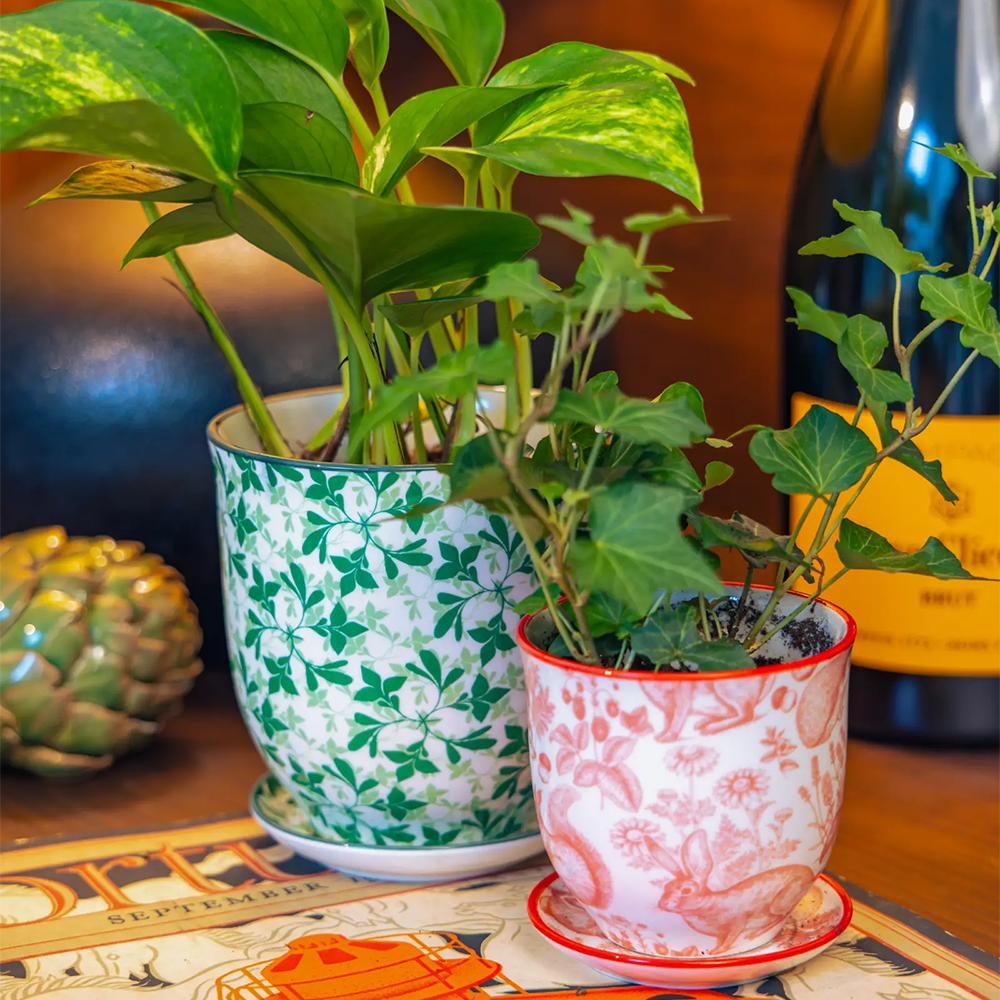
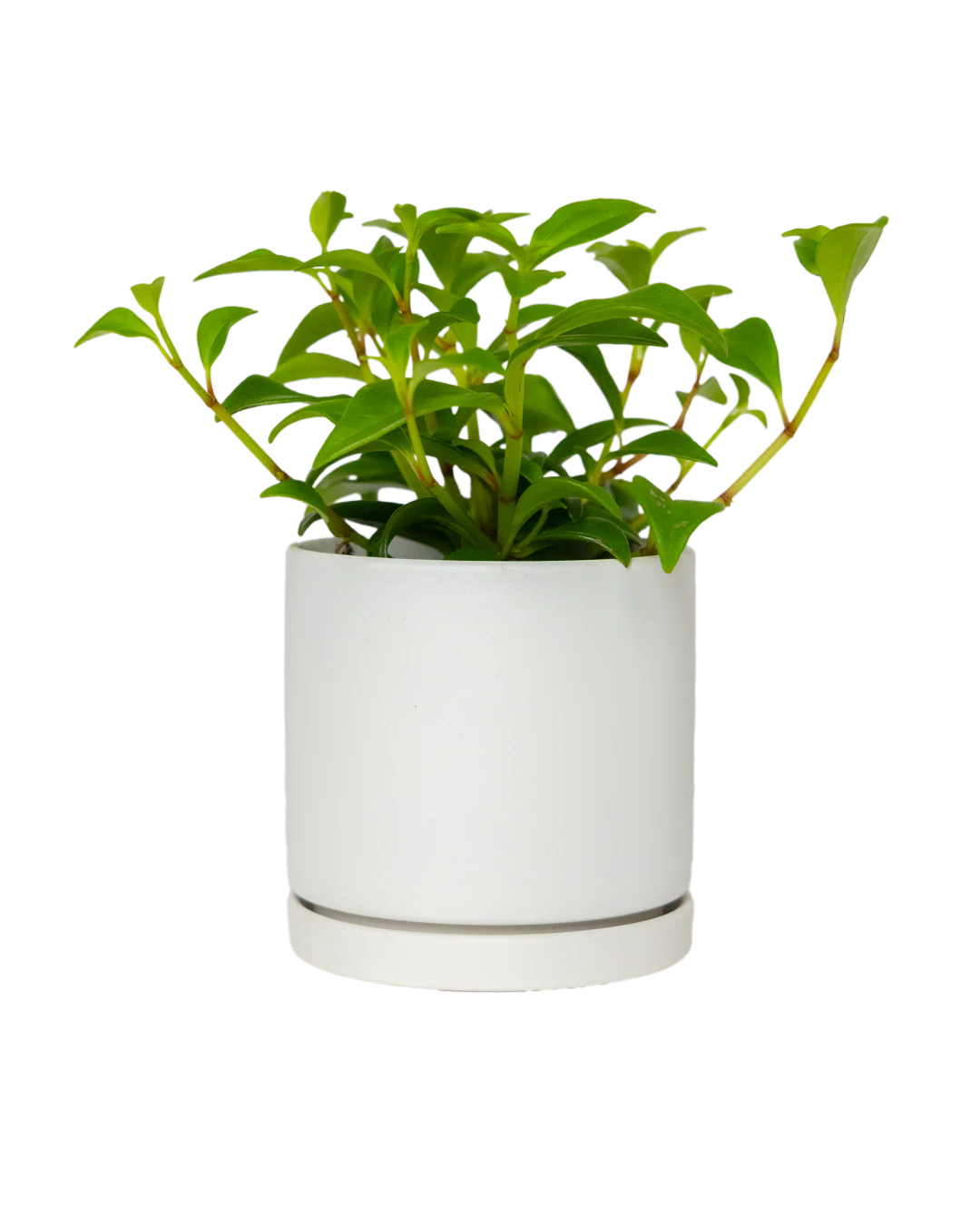
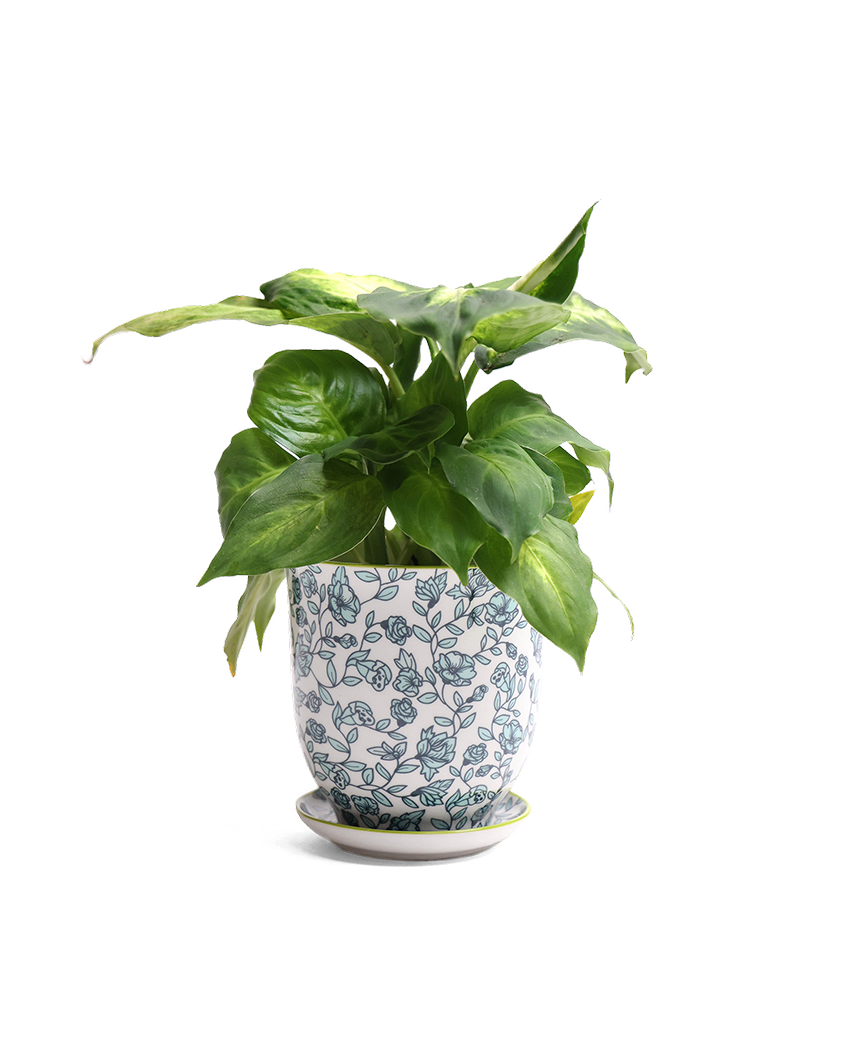
The Galaxy shares a shelf comfortably with the studio's Liberté 4-inch pot for shelves that host both a cut stem and a small potted green thing at once. The porcelain body of the pot picks up light where the Galaxy's flecks release it, and the two glazes hold the shelf together as a small collaboration.


How Chive Approaches Its Glaze Recipes — Studio Notes

Glaze recipes at this studio have been shifting quietly the entire time the operation has existed — an operation that opened in 2004 and never established a formal glaze committee to govern such things — often at the specific request of one particular team member with strong feelings about a specific shade of pale flecking on a specific deep blue. The Galaxy is the current beneficiary of that undocumented discipline. The blue has moved slightly across the intervening seasons, and the fleck density has gained and lost weight, and the piece has stayed recognizable throughout because the underlying form never moved on the potter's wheel. Glazes evolve inside this room. Shapes tend not to.


Inside the Chive Design Studio

Low maintenance, high impact. Let's make home styling look easy.


Frequently asked questions

Why would you choose a blue vase like the Galaxy vase?

A blue vase reads as a colour anchor in most interior palettes and a small colour event in the rest, and the Galaxy sharpens both effects by scattering pale hand-applied dots across the surface that catch whatever ambient light the space happens to provide. Warm interiors soften. Cool interiors sharpen. Either works.

What single flowers look striking on their own in the Galaxy?

Flowers with a decisive single silhouette read best against the Galaxy's flecked exterior — a lone tuberose, a lisianthus on a long stem, an open cosmos head, a solo anemone, a black-eyed Susan riding a long stem. Anything carrying a cluster head competes with the flecks visually and blurs the effect. One tall stem is the intent.

How tall is the Galaxy vase and what space does it need?

The Galaxy stands 5.5 inches tall and roughly 1.5 inches across at the widest point of the body, giving it the footprint of a small pillar candle with the vertical presence of a longer one instead. Windowsills suit it. Narrow shelves suit it. Exact dimensions live on the listing above. Set it near a lamp.

How is the Galaxy vase's ceramic finish made at the studio?

The body is thrown, dried thoroughly, and fired to a deep blue base glaze at cone six, then hand-flecked with a paler second glaze applied under natural window light by a member of the ceramics team who has performed this particular finishing step for years. The piece is then fired a second time to set the flecks permanently. No two come out quite the same. That variation is the point.

What is the safest way to wash the Galaxy vase at home?

Warm water and a light dish soap on a soft cotton cloth, rinsed to clear, dried gently with a smooth lint-free towel afterward. Skip the dishwasher entirely — repeated hot cycles eventually dull layered glazes regardless of a piece's advertised rating. Skip any abrasive scrubber. The pale flecks sit close to the surface. Treat them accordingly.

Which rooms suit the Galaxy vase's shape and scale best?

Rooms with at least one available lamp that can find the piece — a living room corner beside a floor lamp, a bedside table with a reading light, a study shelf next to a work light, a bathroom counter with an above-mirror sconce. The Galaxy trades on light the room is willing to lend it. Rooms lacking a source read the finish flat. Give it a lamp.

Does the Galaxy vase pair well with the Inkwell vase on display?

The Galaxy and the Inkwell share a colour family across two entirely different silhouettes — a tapered tall bud form and a squared inkwell-shaped body — and together they read as a small colour study conducted on a single shelf. The pair asks for at least eight inches of separation to breathe. Anything closer becomes a tie fight.

What was the original idea behind the Galaxy vase's form?

The Galaxy shape emerged from the studio's bud-vase program during 2015, drawn as a tall slender silhouette that would give the flecked finish room to run without breaking on a shoulder or a curve. The finish preceded the form itself. The form followed the finish afterward. The brief was two lines.

Behind the Studio

The story behind the Chive astronaut vases

The story of Laika, Félicette, a solar eclipse in New York, and a space bar that ordered a hundred vases a month until it closed.