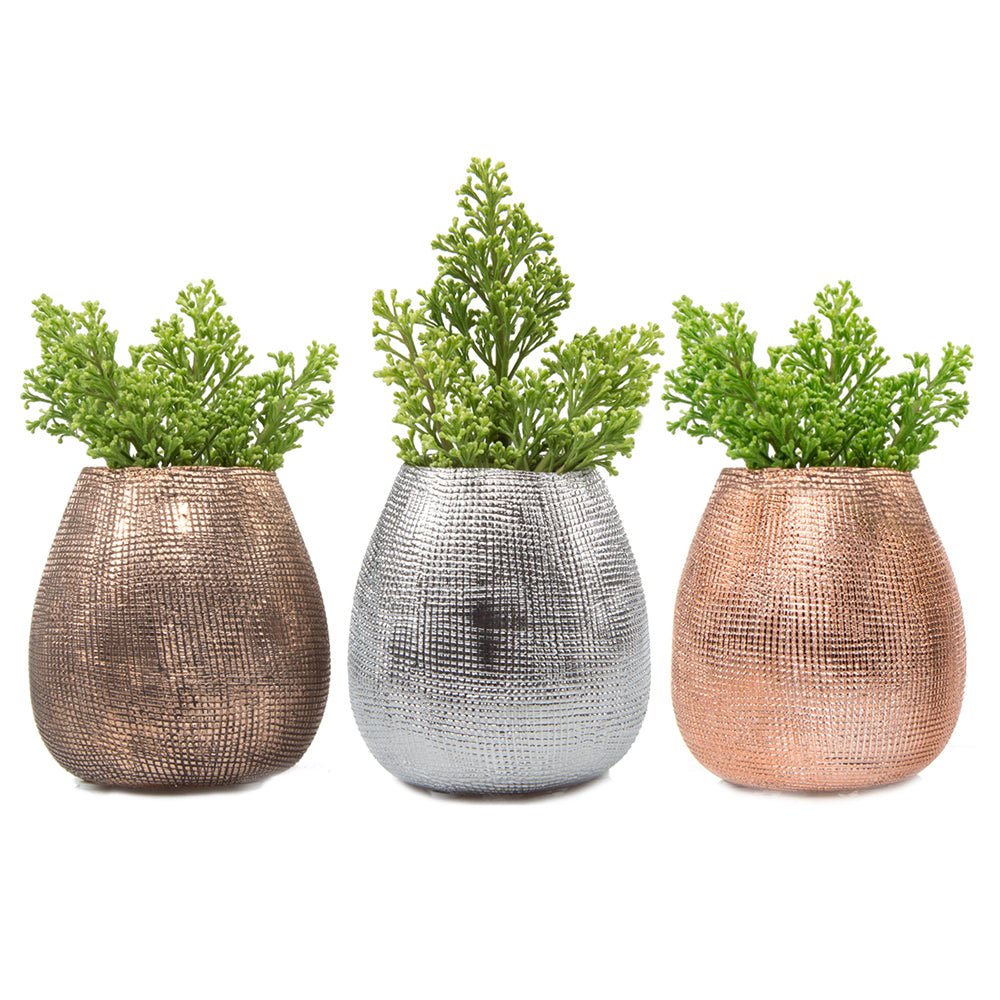
Mesh Ceramic Planter Pot

cache pot

Regular price $22.75
Colors: Antique Rose Gold
Sizes
Cache Pot
Cute
30-day return policy

Pickup available at A.N. Deringer c/o Chive Inc

Usually ready in 24 hours


Curate Your Indoor Landscape With These:

Designed to layer beautifully in any room. Choose an animal pot as your design anchor, then build your custom pottery collection with these complementary companions


Mesh is a ceramic plant pot whose glaze began with a window screen that had to be replaced after a blue jay flew directly into it, which is not how we usually find inspiration but is exactly how this one happened. No two screens warp the same way, which suits the glaze fine.

Someone was standing there holding the damaged screen, about to throw it out, and noticed the texture instead: the woven grid, slightly warped from the impact, catching light in a way that seemed worth keeping. The bird, we should clarify, was completely fine. The screen did not survive. The texture did. There is no drainage hole, so plant a succulent or use it as a cover pot for a nursery container you can lift out to water. Mesh is proof that we will take a good surface wherever it turns up, including off the thing we were about to put in the recycling.

Product detail
  • Color: Antique Rose Gold, Rose Gold, Silver
  • Material: Ceramic
  • Glaze finish: Glazed
  • Finish variation: Natural variation between pieces
  • Drainage: No drainage hole
  • Saucer: No Saucer
  • Dishwasher safe: Yes
  • Indoor / Outdoor: For indoor use and covered outdoor temperate weather use
  • Designed by: Chive Studio
  • Year Designed: 2016
Plants that love this pot

Potting in a Pot Without Drainage

  1. Add a 1-inch layer of small stones or LECA pebbles at the bottom to create a small reservoir, since there is no drainage hole.
  2. Use a well-draining cactus or succulent mix. Not garden soil.
  3. Transplant from the nursery pot, or set the nursery pot inside and lift it out to water.
  4. Water sparingly. Without a drainage hole, less is always safer than more, so let the soil dry between waterings.
  5. Keep it in bright, indirect light, and pour off any standing water pooling at the bottom.

Which pot size for my plant? →

Repotting guide →

Pot Care instructions
  1. Dishwasher-safe. Can also be hand-washed with warm soapy water and a soft cloth.
  2. Glazed pots are dipped and fired in the kiln — they are sealed, durable, and not looking for trouble. No special cleaning products required.
  3. For pots with saucers empty the saucer periodically. Standing water in the saucer defeats the purpose of having a drainage hole, which is a thing we feel strongly about.
  4. Not frost-safe. Designed for indoor use and covered outdoor temperate weather use. Freezing temperatures are not recommended.
Canada wide shipping & returns

Shipping 

  • Standard: 5–8 business days, Express 2–3 business days (at checkout)
  • Canada Wide Shipping: from coast to coast — rates at checkout
  • Packaging Ships: in outer box to protect gift box

View full shipping policy →

Returns

We accept returns within 30 days of delivery on unused hard good items in original packaging. If your piece arrives damaged, contact us within 7 days with a photo and we will replace it at no charge.

View full return policy →

Local pickup & delivery

Delivery: 

  • Delivered by hand across Toronto and the GTA. 
  • Next business day; same-day when you call the shop.
  • Local GTA delivery starts at $14
  • Call for a quote outside of the GTA

Pickup: Order online by 3pm and collect it the same day at:

702 Queen St. W.,
Toronto, ON M6J 1E7
437-777-5021

We are open for in-store shopping

Mon to Thurs: 12pm - 7pm
Fri to Sun: 11am - 7pm

Get Directions

The Story Behind This Piece

The mesh pattern here isn't printed or stamped on afterward — it's carved into the wet clay before anything gets fired, which is the difference between a texture that looks intentional up close and one that looks like it was added later to hide something. Look closely and the lattice reads almost woven, like the pot borrowed its texture from a basket instead of from another piece of ceramic, which is a strange but effective way to make a small planter feel less like factory output and more like an object somebody actually made a decision about. It's compact enough for a single small plant — a pothos cutting, a small succulent, whatever's currently living on a windowsill without much ceremony — and the texture does something practical too: it catches light differently depending on the angle, so the same pot looks slightly different in morning light than it does under a lamp at night. Most small planters disappear into a shelf. This one asks you to actually look at it once, which is a reasonable thing for an object this size to ask of a room. A texture this deliberate rarely goes unnoticed twice — most people run a thumb over it the first time, then again a few weeks later, as if checking it's still really there.


Potting a plant with Chive

  1. Place a 1-inch layer of small stones or LECA pebbles at the bottom of the pot. Optional, but it helps with airflow.
  2. Add well-draining potting mix appropriate to your plant. Not garden soil. We know your grandmother used garden soil. She was wrong about this one thing.
  3. Transplant from the nursery pot, leaving about 1 inch at the top for watering.
  4. Set the pot on the matching saucer.
  5. Water thoroughly until water runs out the drainage hole into the saucer. Empty the saucer once the plant has absorbed what it needs.

The Ultimate Repotting Guide

For those who have killed a plant. Or several. Or, frankly, many.

Before you put a plant into your new pot, you have to get it out of the nursery pot — a process that ends badly more often than any gardening influencer will admit. We wrote a full guide: when to repot (early spring, and not when you're feeling impulsive in October), which soil to use, how to tell your plant is root-bound, and how to avoid the three mistakes that kill perfectly healthy plants within a week of a well-intentioned repotting.

It is the guide we wish someone had handed us twenty-five years ago. It is written by people who have personally committed most of the errors in it.
The Rest of the No-Drainage Range
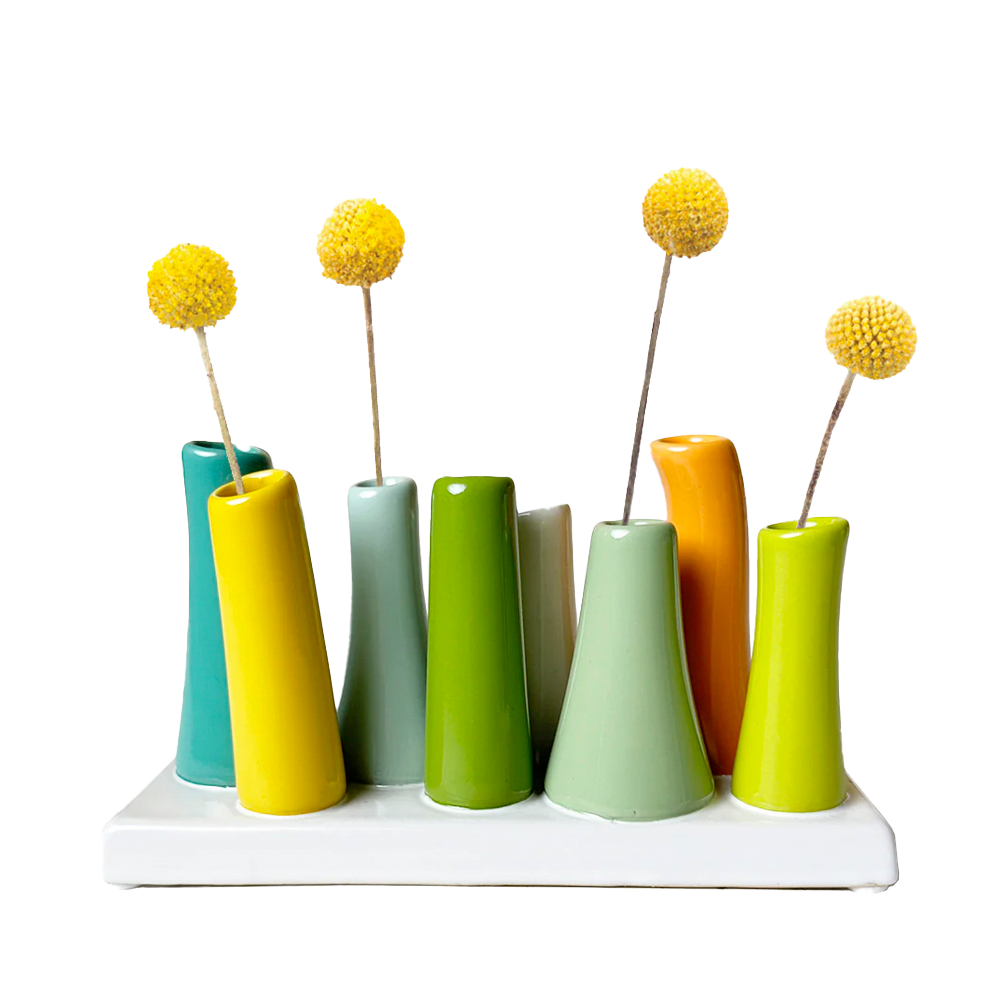
A carved lattice texture is one way to make a small pot feel considered; the Pebble Ceramic Ikebana Kenzan Container takes an entirely different approach — function over texture, built around holding stems in place rather than catching light.

No Drainage, No Problem

Texture carries most of the differentiation among Chive's pots, where a carved surface like this one sits next to smooth glazes, drainage-forward shapes, and everything in between.

Start Something From Seed

A pot this size usually holds a single houseplant rather than a succulent cluster, and Verte Rx keeps a small, single-plant setup like this one properly fed without the guesswork of scaling down a bigger dose.

About Chive Studio

The studio has been carving surface texture into wet clay since 2004, mostly because a flat glazed surface is the easiest thing to make and the least interesting thing to look at. Cutting a pattern into wet clay before firing takes longer than skipping the step entirely, and it's exactly the kind of extra effort that doesn't show up on a spec sheet but shows up immediately once the piece is actually sitting in a room. The mesh pattern is one of several textures the studio keeps returning to, mostly because texture is the cheapest way to make a small object feel considered rather than mass-produced. Most planters this size get chosen for what fits in them. This one gets chosen first, and the plant gets decided on after.


Plant Tips from Chive Studio

Quick tips, straight answers, and the occasional reminder that overwatering kills more houseplants than neglect does.


Frequently asked questions

What is the Mesh pot used for?

The Mesh is a ceramic pot for indoor plants. It works well for succulents, cacti, and other plants that like to dry out and suits modern, boho, and minimalist rooms. As a ceramic pot, the Mesh fits a shelf, sill, or desk and pairs cleanly with the rest of the Chive pot range. It comes in several colourways to match different rooms.

Does the Mesh pot have a drainage hole?

No, the Mesh is an indoor pot without a drainage hole, so it is best used with plants that tolerate less frequent watering or as a cachepot. Either plant succulents directly and water lightly, or drop a nursery pot inside and lift it out to water. Without a drainage hole, the trick is to add water slowly and avoid leaving any pooled at the bottom.

What plants grow well in the Mesh?

The Mesh is a ceramic pot that holds a nursery plant of a similar width, so match the grower pot to the opening rather than the mature size of the plant. Good choices include succulents, cacti, and other plants that like to dry out. For an indoor plant pot, size up by about an inch when you repot so roots have room without swimming in soil.

Does the Mesh come with a saucer?

The Mesh does not include a saucer, which suits its use as a decorative pot. If you plant directly in it, water lightly so nothing collects at the base, or set a nursery pot inside and lift it out to water over a sink. A small cork pad underneath protects furniture if you keep the Mesh on a shelf. As an indoor pot without a tray, it is forgiving as long as you water with a light hand.

Is the Mesh pot ceramic?

Yes, the Mesh is a ceramic plant pot. Ceramic is fired hard, holds glaze colour well, and does not break down with watering the way untreated materials can, which makes ceramic plant pots a reliable choice for indoor plants. The Mesh is glazed to seal the surface, so it wipes clean and keeps its finish on a sill, shelf, or table.

How do I water a plant in the Mesh?

To water the Mesh, add small amounts and stop before anything pools at the bottom, since this pot has no drainage hole. The easiest method is to keep the plant in its nursery pot, lift it out to water over a sink, let it drain, and set it back. Watering a pot without drainage is mostly about restraint, less water, less often.

Is the Mesh good for succulents?

The Mesh is a good ceramic pot for succulents. Succulents like the tighter, fast-drying conditions of a pot without a drainage hole, as long as you water lightly. For anyone searching for a ceramic pot for succulents, the Mesh covers both looks and function. Match the nursery pot to the opening and the plant settles in without fuss.

Is the Mesh a good gift for a plant lover?

The Mesh makes a practical gift for a plant lover because it is a finished ceramic pot that solves a real problem rather than adding clutter. It pairs easily with a plant they already own and suits most modern interiors. For a plant pot gift that gets used, the Mesh is an easy choice, and it suits anyone building an indoor plant collection.

The pot is sorted. Now what goes in it?

Shido seeds come vacuum-sealed, non-GMO, and packaged well enough that people keep the packets after the seeds are gone. Which is either a design success or a problem, depending on how you look at it.

Your new pot is waiting.