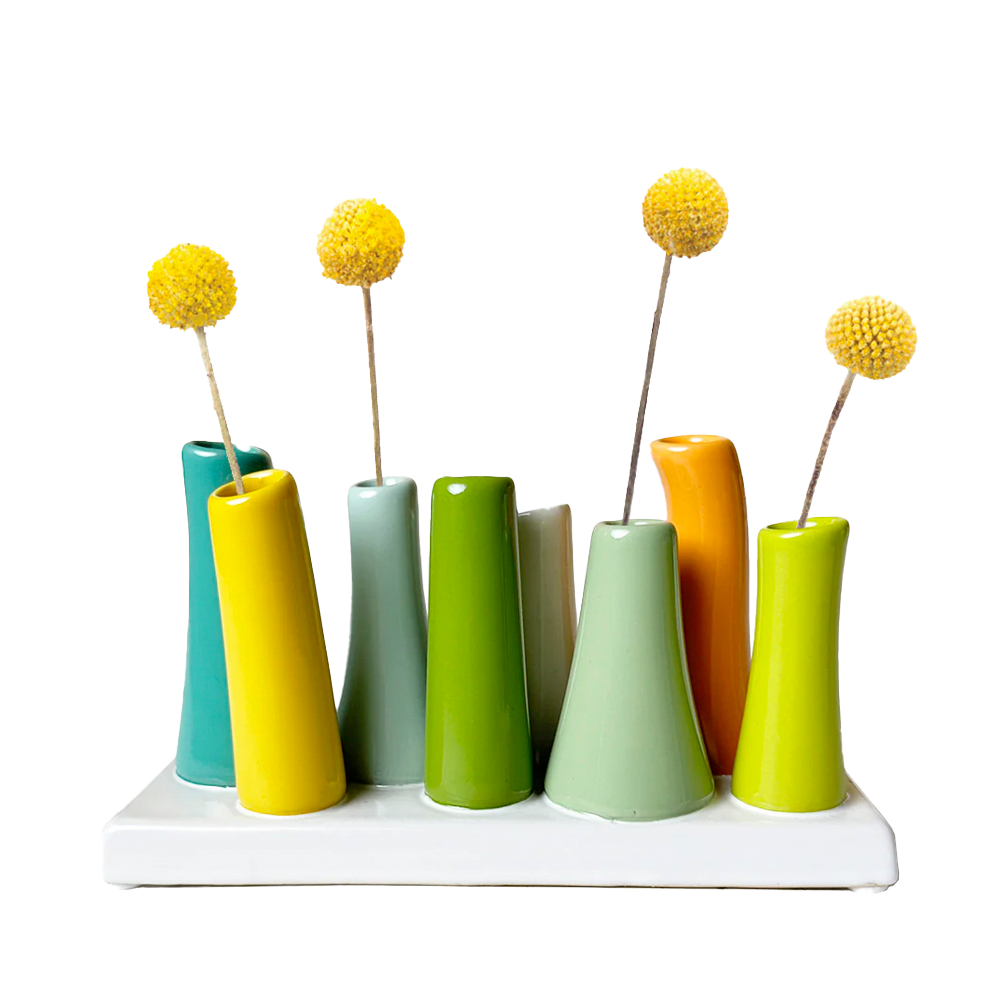
Pebble Ceramic Ikebana Kenzan Container

Ceramic Kenzan Flower Frog

Regular price $21.50
Colors: Orange
Sizes
Thoughtfully Designed
Dishwasher safe cleaning
30-day return policy

Pickup available at A.N. Deringer c/o Chive Inc

Usually ready in 24 hours


Build the Arrangement That Looks Harder Than It Was

Pick a vase to anchor the shelf, then add the rest until it reads as curated instead of collected.


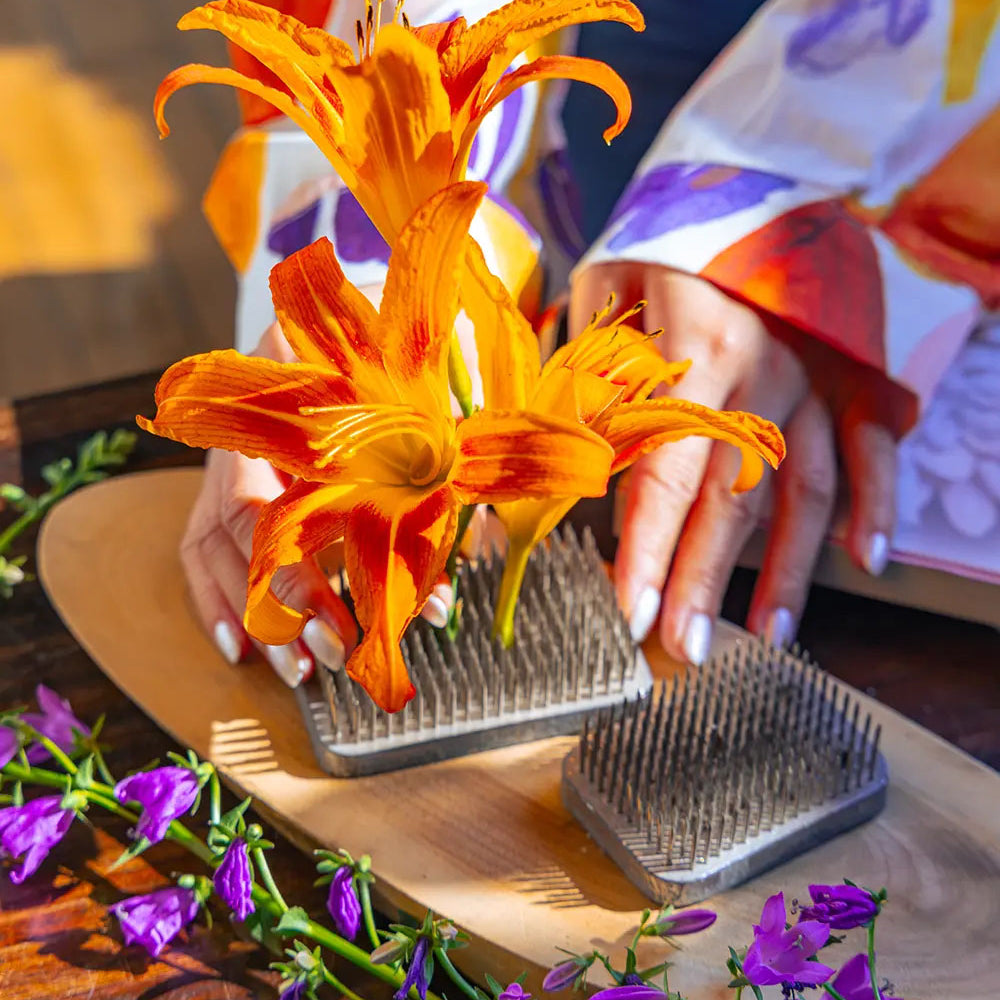
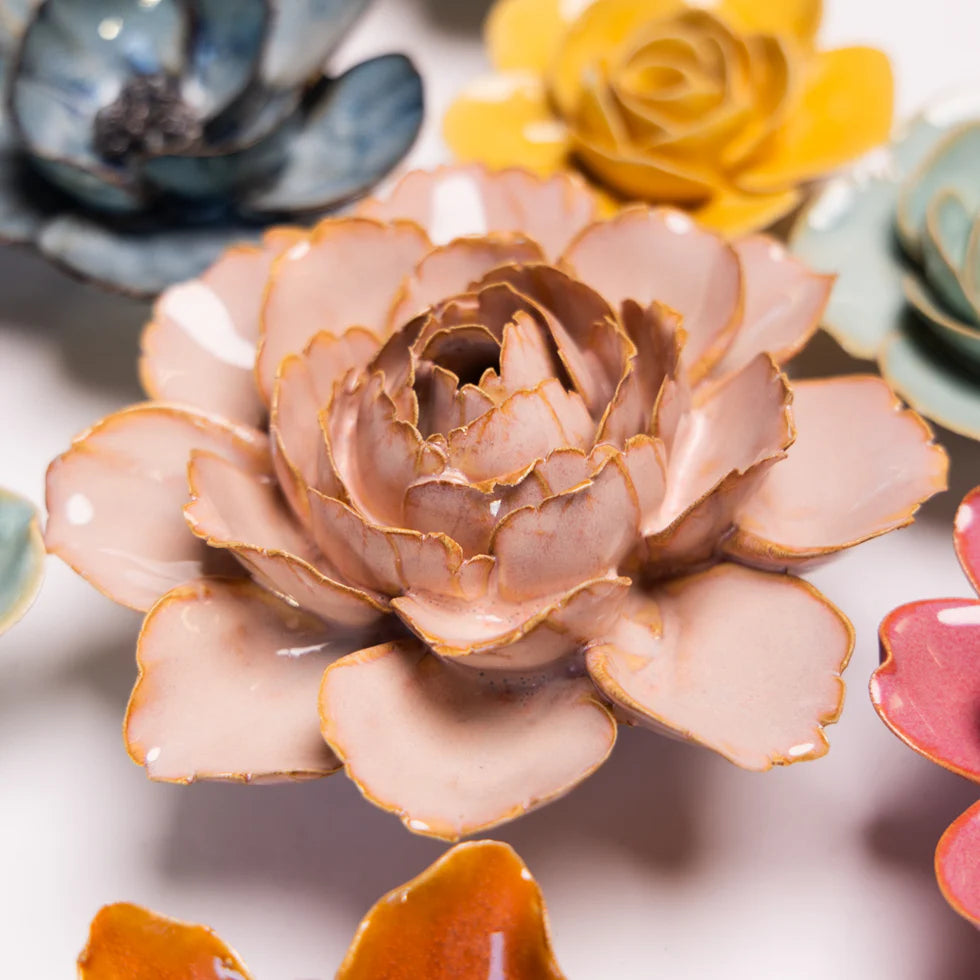
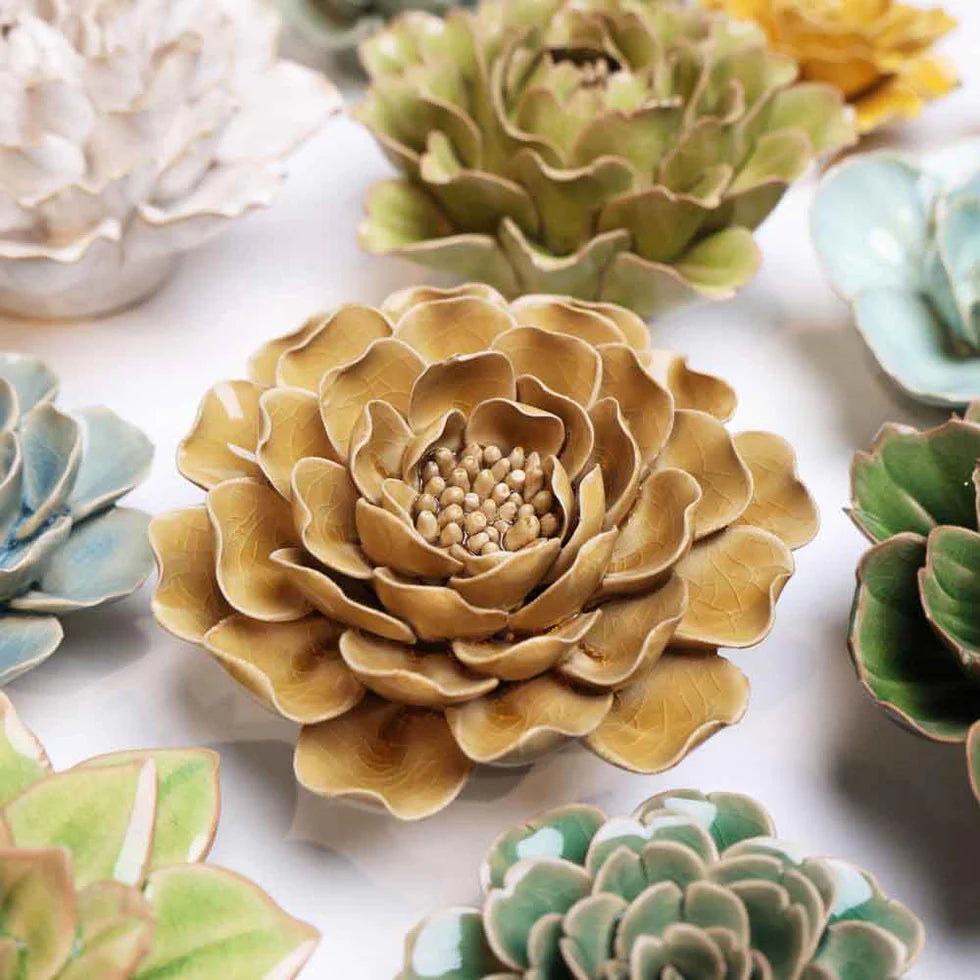
A ceramic kenzan flower frog solves the one problem every cut-flower arrangement has: stems that lean, drift, or slump sideways by hour two. Pebble pairs a glazed ceramic dish with a built-in pin base, so stems press in and hold exactly where you put them, whatever the angle. It's 4 inches across and 2.5 inches tall, small enough for a windowsill, heavy enough to stay put once it's loaded. Cut stems shorter than you think you should, set them on the pins, and the shorter path pulls water up faster — flowers arranged this way tend to outlast the same stems dropped loose in a tall vase. No drainage hole here; it's built to hold water, not soil, though it moonlights fine as a small succulent dish between arrangements. Comes glazed in orange, silver, or white. It's a strange little object to explain and an easy one to use — which is usually the sign a design got something right.

Product detail
  • Material: Ceramic
  • Glaze finish: Glazed
  • Year Designed: 2010
Flowers that Love this Floral Frogs
  • Haworthia
  • Zebra cactus
  • Pothos cuttings
  • Air plants (tillandsia)
  • Crassula ovata

Quick Guide to Building a Ikebana Floral Arrangement

  1. Choose a low, open vessel
  2. Set the frog before anything else
  3. Place the main line first
  4. Add the second and third lines
  5. Fill in sparingly
  6. Step back before deciding it's finished
  7. Reset the frog between arrangements

Canada wide shipping & returns

Delivery: 

  • Delivered by hand across Toronto and the GTA. 
  • Next business day; same-day when you call the shop.
  • Local GTA delivery starts at $14
  • Call for a quote outside of the GTA

Pickup: Order online by 3pm and collect it the same day at:

702 Queen St. W.,
Toronto, ON M6J 1E7
437-777-5021

We are open for in-store shopping

Mon to Thurs: 12pm - 7pm
Fri to Sun: 11am - 7pm

Get Directions

Local pickup & delivery

Delivery: 

  • Delivered by hand across Toronto and the GTA. 
  • Next business day; same-day when you call the shop.
  • Local GTA delivery starts at $14
  • Call for a quote outside of the GTA

Pickup: Order online by 3pm and collect it the same day at:

702 Queen St. W.,
Toronto, ON M6J 1E7
437-777-5021

We are open for in-store shopping

Mon to Thurs: 12pm - 7pm
Fri to Sun: 11am - 7pm

Get Directions

Image description

The Story Behind This Piece

A kenzan is really just a heavy base studded with pins, designed to hold cut stems upright in shallow water without a vase's help — the tool most ikebana arrangements actually depend on, hidden entirely once the flowers go in. Ceramic makes an unusual choice for the base, since most kenzan run metal specifically for the weight, but a dense ceramic disc turns out to do the same job at four inches across without needing lead or iron to stay put once stems start pulling at odd angles. The pins themselves stay metal, set into the fired ceramic base rather than moulded into a single piece, which lets the two materials each do the job they're actually suited for — ceramic for weight and a finished surface, metal for pins that need to hold an edge. At two and a half inches tall, it disappears into almost any shallow dish or bowl once submerged, which is the whole point of the design. Nobody's supposed to notice the kenzan itself. They're supposed to notice the arrangement it's quietly holding in place. Most people only ever encounter one once, tucked at the bottom of a bowl they've already filled with water and stems, never actually seeing the piece doing the work until an arrangement gets taken apart and rebuilt.

Quick Guide to :

Building an Ikebana Arrangement

A floral frog, called a kenzan in ikebana, is a small weighted disc studded with metal pins. Stems get pushed onto the pins and hold whatever angle they were given, no tape or spare hand required.

Choose a low, open vessel. Ikebana favors shallow bowls over tall vases, since a kenzan needs a flat base to sit on. A tall bud vase will not do.

Set the frog before anything else. Place the kenzan first, then add water. Water over pins is slippery, and a shifting kenzan takes the arrangement with it.

Place the main line first. Ikebana builds around three stems at different heights: tall (shin), mid (soe), short (hikae). Start with the tallest, cut with intention, since it sets the scale.

Add the second and third lines. Lean the mid stem outward, then the short stem the opposite way, low and close to the rim. Together they form an uneven triangle. Symmetry is what a kenzan avoids.

Fill in sparingly. Empty space is a design element, not a gap to fix. A few stems angled to hide the pins is enough. Past that, it looks like a grocery store bouquet.

Step back before calling it finished. Walk across the room and look again. There is almost always one stem to remove.

Reset the frog between arrangements. Trimmings settle in the pins and give the next stems less to hold onto. Rinse it clear before the next round.

Pro Tip: The light does half the work.

Glass catches and bends light in a way ceramic can't. Set the arrangement somewhere it'll get some late afternoon sun, even for an hour, and the water and stems start doing something a solid vase never will.

Perfect Pairs for Any Shelf

Image description

Mesh Ceramic Planter Pot

Pebble's function-over-fuss approach pairs naturally with the Mesh Ceramic Planter Pot, a similarly small piece that earns its keep through texture rather than a fussy silhouette.

Find this among Chive's pots collection, where small, function-first pieces like this one sit next to larger planters built for entirely different jobs.

A kenzan holds stems in water rather than soil, which makes it a natural companion to Chive's vase collection rather than anything built around potted, rooted plants.


About Chive Studio

Ikebana tools have never been the studio's biggest category, but they've stayed in rotation since 2004 anyway, mostly because a kenzan solves a real problem that a vase alone never quite manages — getting a stem to stand exactly where you put it, rather than wherever gravity and water pressure decide. The rest of the catalogue is generally built to be looked at directly. This is one of the rare pieces built to disappear entirely once it's doing its job, a different design problem than most of the catalogue has to solve, and one the studio has come to genuinely enjoy solving. That's a fair trade, most days. An object that succeeds by vanishing is still succeeding, even if nobody ever compliments it directly.


Inside the Chive Design Studio

Low maintenance, high impact. Let's make home styling look easy.


Frequently asked questions

What is a ceramic kenzan used for in flower arranging?

A kenzan holds cut flower stems upright in shallow water, doing the structural work a vase alone can't manage on its own. The heavy base and metal pins keep each stem exactly where it's placed rather than drifting or leaning as the arrangement settles. That structural support is really the entire reason kenzan exist at all.

How do you use the Pebble kenzan for ikebana?

Submerge it in a shallow dish or bowl of water, then push stems down onto the pins at whatever angle the arrangement calls for. The kenzan itself stays hidden once water and flowers cover it, doing its job entirely out of sight. Trimming stems at a slight angle beforehand makes them easier to seat firmly onto a pin.

How many pins does the Pebble ceramic kenzan have?

The Pebble kenzan carries enough pins across its ceramic base to hold a genuinely full arrangement, spaced closely enough that stems of different thicknesses can all find a secure spot without crowding each other out. That density is what lets stems of noticeably different thickness all sit securely without special adjustment.

Does a ceramic kenzan work as well as a metal one?

Yes — a dense ceramic base provides the same weight and stability a metal kenzan relies on, without needing lead or iron to keep it anchored once stems start pulling at odd angles during arranging. The trade-off is a slightly heavier overall piece, which most people consider a fair exchange for the finish.

How do you clean a ceramic ikebana kenzan container?

Rinse it under running water after each use to clear away plant debris, and an old toothbrush works well for getting between the pins if buildup starts to collect. Ceramic doesn't stain or hold odour the way some materials do, so a quick rinse is usually all it needs. Nothing more elaborate than that.

How big is the Pebble ceramic kenzan in inches?

It measures 4 inches in diameter and 2.5 inches tall, sized to sit comfortably inside most shallow bowls or dishes without needing a specially matched container built around it. That's compact enough for a windowsill grouping but heavy enough to stay anchored once stems are loaded. Small, but it holds its ground.

Is the Pebble kenzan good for beginners at ikebana?

Yes, more so than many kenzan actually — the pin spacing is forgiving of imprecise stem placement, which matters more to a beginner than a densely packed traditional metal grid built for advanced technique. Traditional metal kenzan pack their pins closer together, which rewards experience more than it welcomes a first attempt.

When did Chive first make the Pebble kenzan container?

Ceramic ikebana tools have stayed in the studio's rotation since 2004 in one form or another, though this particular shape came later, once it became clear a ceramic base could do the job as well as a metal one. The ceramic version has held its own against the traditional metal standard ever since.